turndetect.co

Free & Unlimited Words & No Signup

As AI-generated writing becomes increasingly sophisticated, distinguishing between human-written and machine-generated content has become one of the biggest challenges in education, publishing, journalism, and content marketing. From ChatGPT and GPT-5 to Claude, Gemini, and DeepSeek, large language models can now produce text that closely resembles human writing.
Among the growing number of AI detection platforms, GPTZero has emerged as one of the most respected names in the industry. Originally developed for educators concerned about academic integrity, GPTZero has evolved into a comprehensive AI detection platform used by teachers, universities, publishers, recruiters, and businesses worldwide.
But how does GPTZero actually work? How accurate is it compared to competitors such as Turnitin and ZeroGPT? And is it worth using in 2026?
Let’s take a detailed look.

1. How GPTZero Detects AI-Generated Content

GPTZero was originally designed around two linguistic concepts:

  • Perplexity
  • Burstiness
    These metrics helped identify patterns commonly found in AI-generated writing.
    However, GPTZero’s modern detection engine has evolved far beyond those early approaches.
    Today, GPTZero utilizes a multi-layer machine learning architecture trained on millions of human-written and AI-generated documents. Rather than relying on a single metric, the system analyzes numerous signals simultaneously, including:
  • Sentence predictability
  • Vocabulary distribution
  • Structural consistency
  • Semantic coherence
  • Stylistic variation
  • Context transitions
  • Human editing patterns
    The detector is trained using outputs from major AI systems, including:
  • ChatGPT
  • GPT-4
  • GPT-5
  • Claude
  • Gemini
  • DeepSeek
  • Llama
  • Mistral
    GPTZero attempts to identify subtle characteristics that often appear in AI writing:
  • Excessively uniform sentence lengths
  • Predictable word choices
  • Consistent paragraph structures
  • Lack of natural stylistic variation
  • Overly polished transitions
    Unlike simple AI checkers that generate a single percentage score, GPTZero provides a detailed analysis showing:
  • AI probability score
  • Sentence-level highlights
  • Human vs AI writing breakdown
  • Writing pattern explanations
  • Confidence levels
    This transparent approach helps users understand why a text was flagged rather than simply presenting a black-box verdict.

2. GPTZero Features: More Than an AI Detector
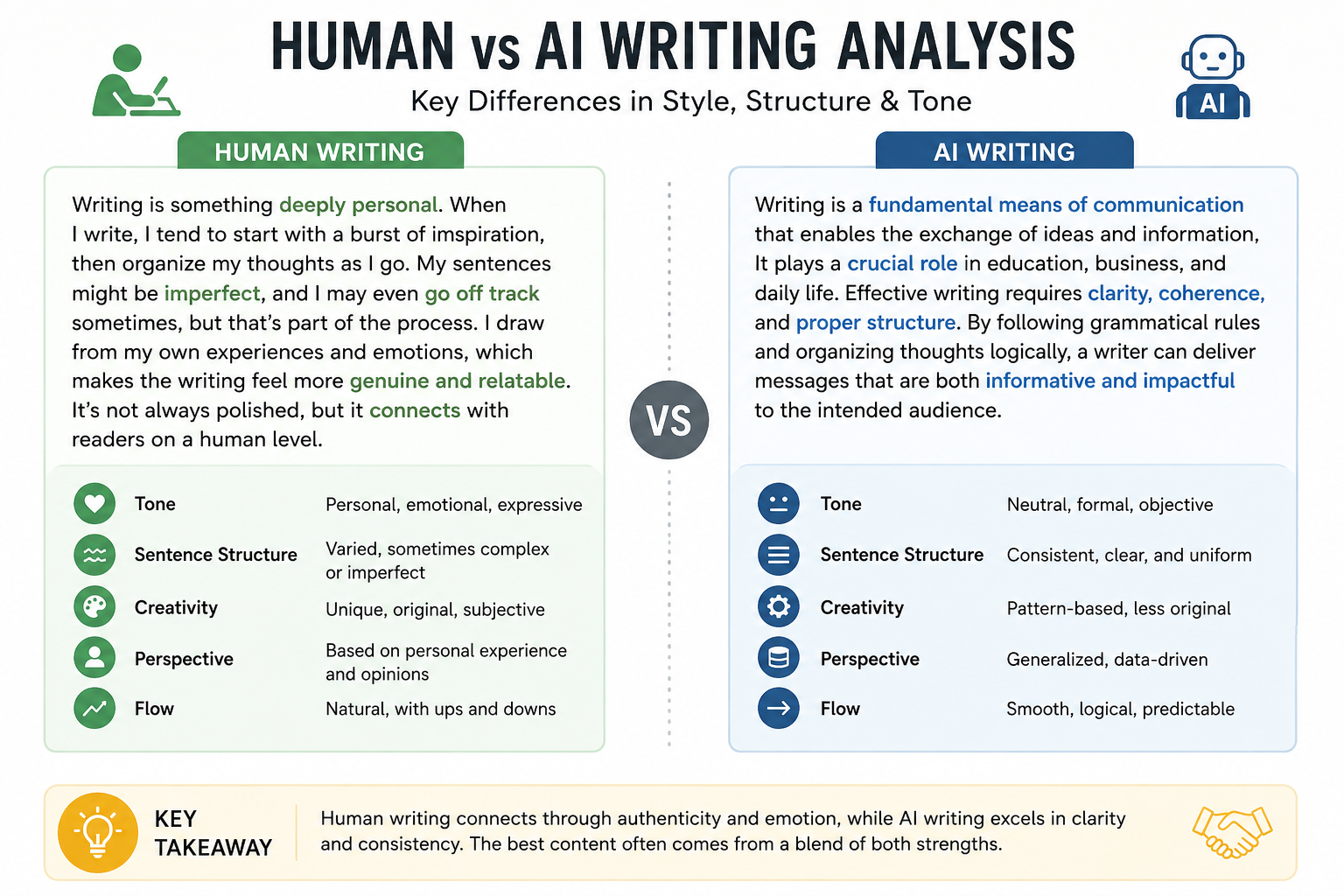
Human vs AI Writing Comparison
Over the last two years, GPTZero has expanded from a detection tool into a broader content verification platform.
Its flagship feature remains the AI Content Detector, but several additional tools have been added.

Core Detection Features

  • AI writing detection
  • Sentence-level highlighting
  • Paragraph-level analysis
  • Confidence scoring
  • Batch document scanning
  • PDF and DOCX support

Educator Tools

GPTZero has become particularly popular among schools and universities because it offers:

  • Classroom integrations
  • LMS compatibility
  • Assignment monitoring
  • Student writing reports
  • Authorship verification

Chrome Extension

One of GPTZero’s strongest advantages is its browser extension, which allows users to analyze content directly on websites, Google Docs, and online platforms.

Writing Reports

GPTZero generates detailed reports showing:

  • Percentage of AI-generated content
  • Highlighted suspicious passages
  • Writing pattern analysis
  • Downloadable evidence reports

Enterprise Solutions

Organizations can access:

  • API integrations
  • Team management
  • Workflow automation
  • Bulk document analysis
  • Custom reporting dashboards
    The platform has become especially attractive to publishers and agencies that need to verify large volumes of content efficiently.

3. GPTZero Accuracy: Real-World Performance in 2026

Accuracy is where GPTZero truly differentiates itself from many competitors.
The company regularly publishes benchmark results claiming detection rates above 98% for modern AI models.
More importantly, many independent evaluations conducted throughout 2025 and 2026 have shown GPTZero consistently ranking among the top-performing AI detectors available.

Strengths

GPTZero performs particularly well when detecting:

  • Pure ChatGPT outputs
  • GPT-4 and GPT-5 generated content
  • Claude-generated essays
  • Long-form AI articles
  • AI-assisted academic writing
    In many benchmark tests, GPTZero successfully identifies obvious AI content with extremely high confidence.

False Positives

One of the most important metrics for any AI detector is the false-positive rate.
A false positive occurs when genuinely human-written text is incorrectly labeled as AI-generated.
Compared with many competing tools, GPTZero generally maintains a lower false-positive rate.
This is particularly important for:

  • Students
  • Journalists
  • Researchers
  • Professional writers
    because incorrect accusations can have serious consequences.

Areas Where GPTZero Struggles

Like every AI detector, GPTZero is not perfect.
Challenges remain when analyzing:

  • Heavily edited AI content
  • Human-AI collaborative writing
  • Very short documents
  • Technical documentation
  • Non-native English writing
    When AI-generated text has been extensively revised by humans, detection accuracy naturally decreases.
    This limitation affects every major detector currently available.

Practical Reliability

For everyday use, GPTZero generally provides reliable guidance.
Most experts recommend viewing results as:

Strong indicators rather than definitive proof.
The best practice remains combining detector results with human review and contextual evidence.


4. GPTZero vs Turnitin vs ZeroGPT
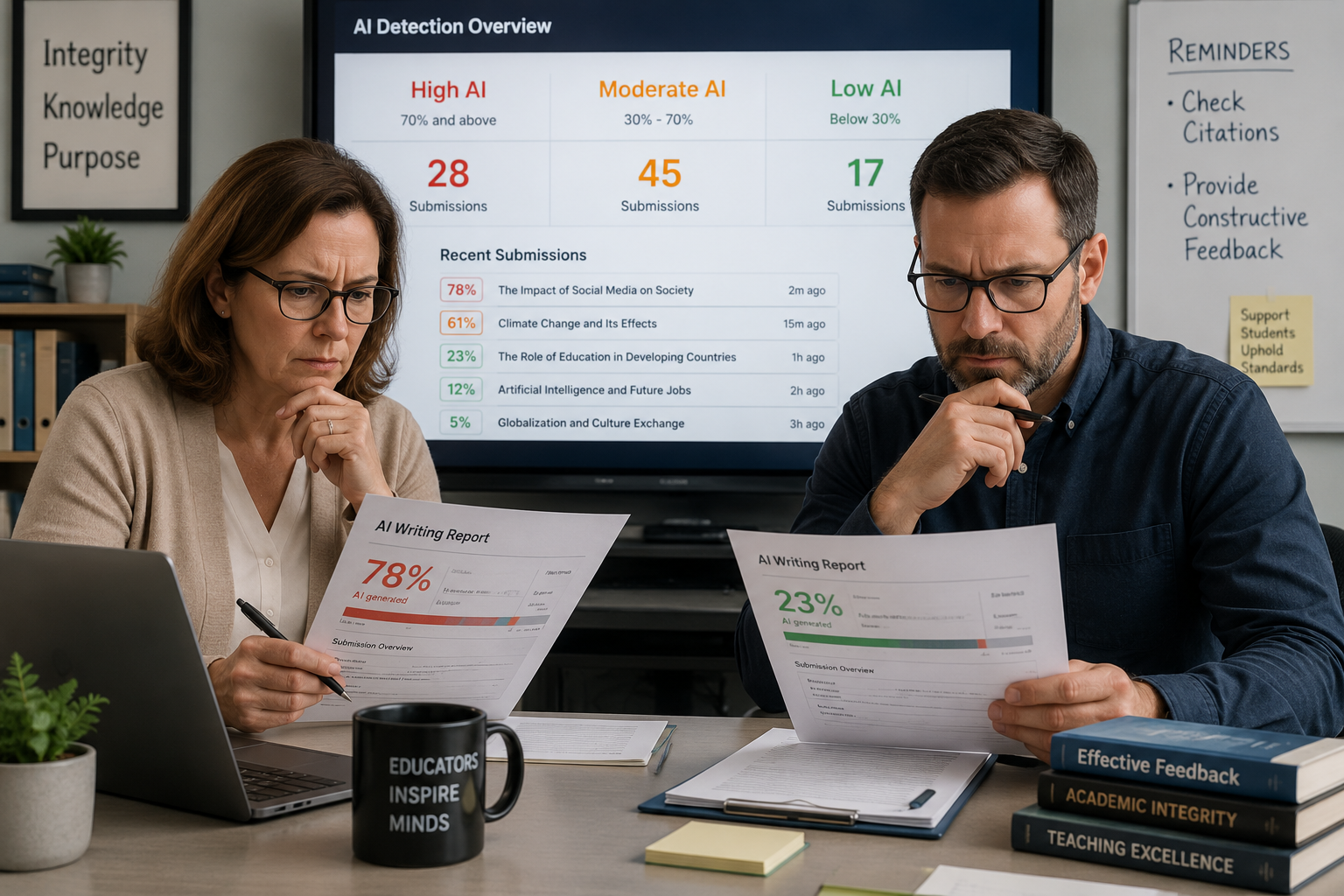
Teachers Reviewing AI Reports
The AI detection market has become increasingly competitive.
Let’s compare the three most discussed platforms.

Feature GPTZero Turnitin ZeroGPT
Individual Access
Educational Focus ⚠️
AI Detection Accuracy Very High Very High Moderate–High
False Positive Rate Low Very Low Higher
Free Version
Browser Extension Limited
API Access Institutional
Plagiarism Detection Limited Strong Strong
LMS Integration Growing Excellent Limited

GPTZero

Best for:

  • Teachers
  • Students
  • Publishers
  • Content reviewers
    Strengths:
  • Strong detection accuracy
  • Transparent reports
  • Low false-positive rates

Turnitin

Best for:

  • Universities
  • Colleges
  • Educational institutions
    Strengths:
  • Deep academic integrations
  • Large historical writing database
  • Institutional workflows
    Weaknesses:
  • Not available directly to most individuals

ZeroGPT

Best for:

  • Casual users
  • Bloggers
  • Freelancers
    Strengths:
  • Free access
  • Large tool ecosystem
  • Simple interface
    Weaknesses:
  • More inconsistent results in independent testing

Conclusion: Is GPTZero Worth Using in 2026?

GPTZero has matured into one of the most capable AI content detection platforms available today. Its modern detection architecture, educator-focused design, transparent reporting system, and strong real-world accuracy make it a leading choice for individuals and organizations seeking reliable AI detection.
While no detector can guarantee perfect results—especially as AI models continue to improve—GPTZero consistently performs better than many alternatives when balancing detection accuracy and false-positive risk.
For educators, publishers, content teams, and students who need trustworthy AI detection without institutional barriers, GPTZero remains one of the strongest options available in 2026.

Final Verdict

Rating: 9.2 / 10
✅ Excellent detection accuracy
✅ Strong transparency and reporting
✅ Low false-positive rates
✅ Useful browser and classroom integrations
⚠️ Less effective on heavily human-edited AI content
⚠️ Premium features required for advanced workflows
If you’re looking for a dependable AI detector that combines accessibility with professional-grade analysis, GPTZero is absolutely worth considering.
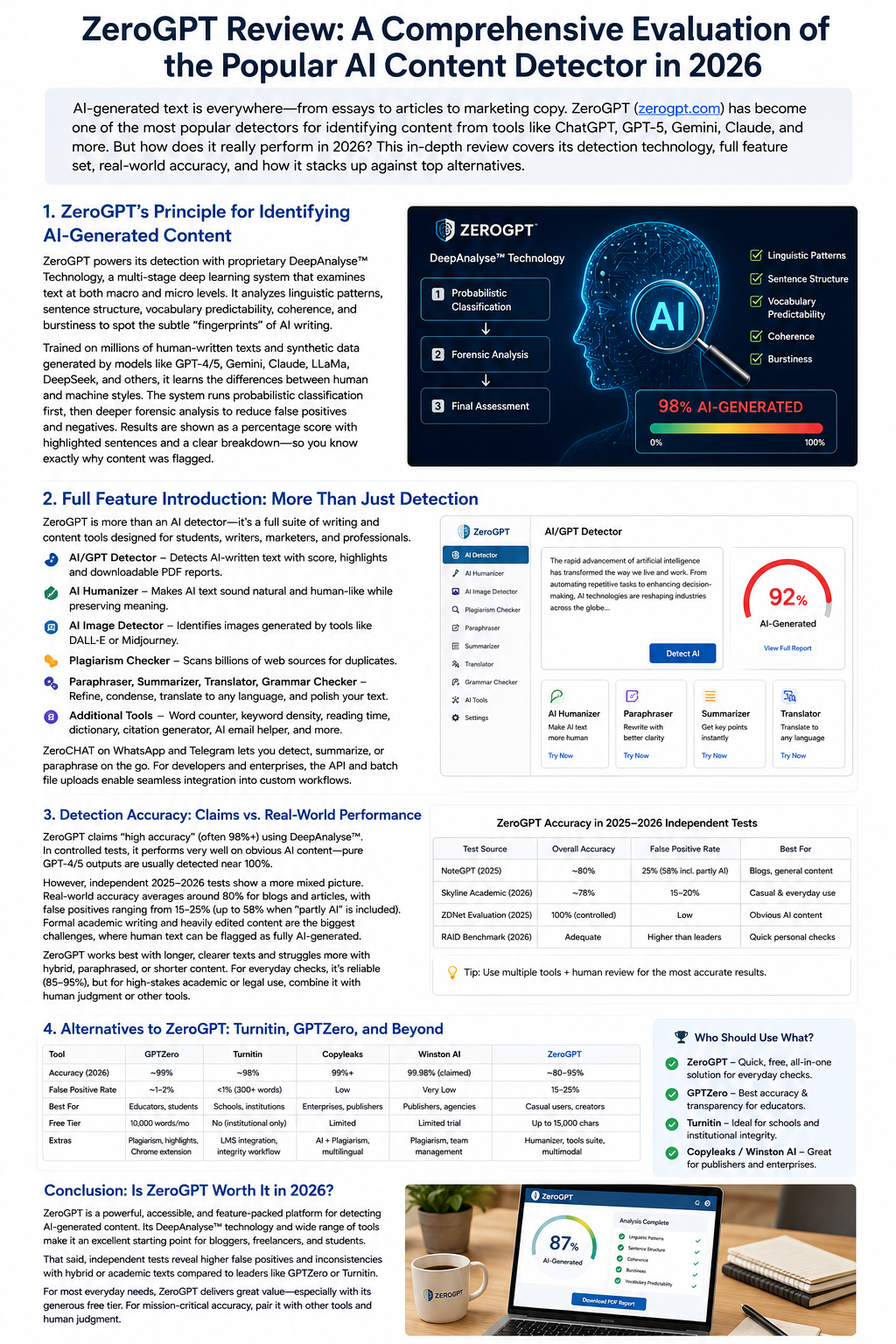
GPTZero Review 2026

Disclaimer: AI detection systems evolve constantly, and no method can guarantee a specific score or outcome. The workflow below focuses on improving readability, originality, and authentic writing rather than attempting to “beat” any detection system. Always follow your institution’s academic integrity policies.


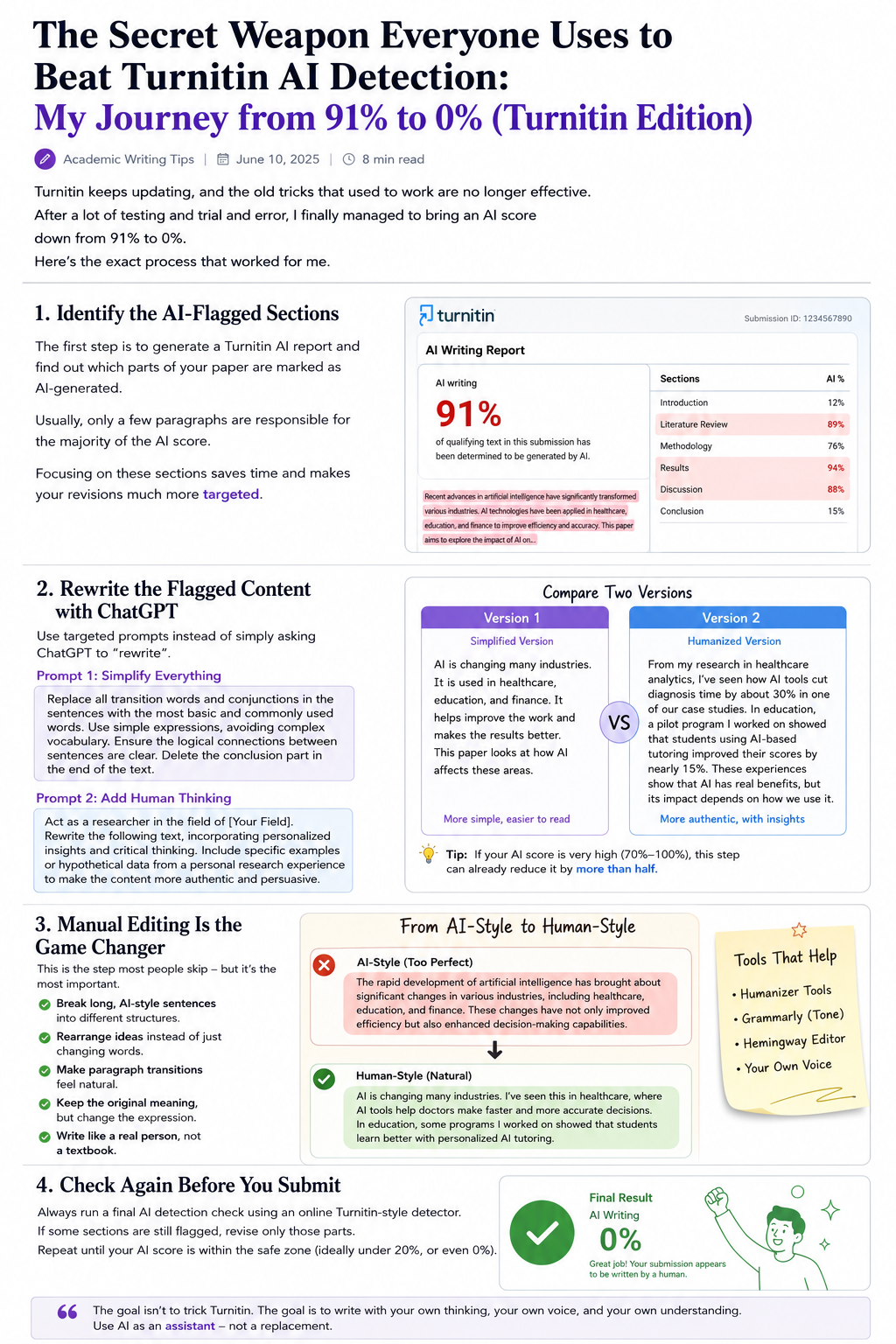
Comparison showing AI-generated text beside a revised human-style paragraph with editing notes

Turnitin Changed. The Old Tricks No Longer Work.

If you’ve recently checked a paper in Turnitin, you’ve probably noticed something frustrating.
Methods that worked a few months ago suddenly stopped working.
Why?
Because Turnitin continuously updates its AI writing detection models. As the detection algorithm evolves, many older prompting strategies and “AI bypass” techniques become much less effective.
After dozens of rounds of testing on different essays, I eventually found a workflow that consistently produced writing that was more natural, easier to read, and significantly less likely to be flagged as overly AI-like.
Here is the workflow I personally use.

Step 1: Identify Which Sections Need Revision

Before rewriting anything, examine your Turnitin AI Writing report carefully.
Don’t immediately rewrite the entire essay.
Instead, identify the paragraphs or sections that receive the highest AI writing indication.
Usually these sections contain patterns like:

  • perfectly structured paragraphs
  • repetitive sentence openings
  • excessive transition words
  • overly formal wording
  • predictable sentence rhythm
  • generic conclusions
    Once you’ve identified these passages, rewrite only the problematic sections first.
    This saves a huge amount of time.

Step 2: Use ChatGPT to Simplify the Writing

Instead of asking ChatGPT to completely regenerate the article, ask it to simplify and normalize the language.
One prompt that works surprisingly well is:

1
Replace all transition words and conjunctions in the sentences with the most basic and commonly used ones. Use simple expressions, avoiding complex vocabulary. Ensure the logical connections between sentences are clear. Delete the conclusion part at the end of the text.

Why does this help?
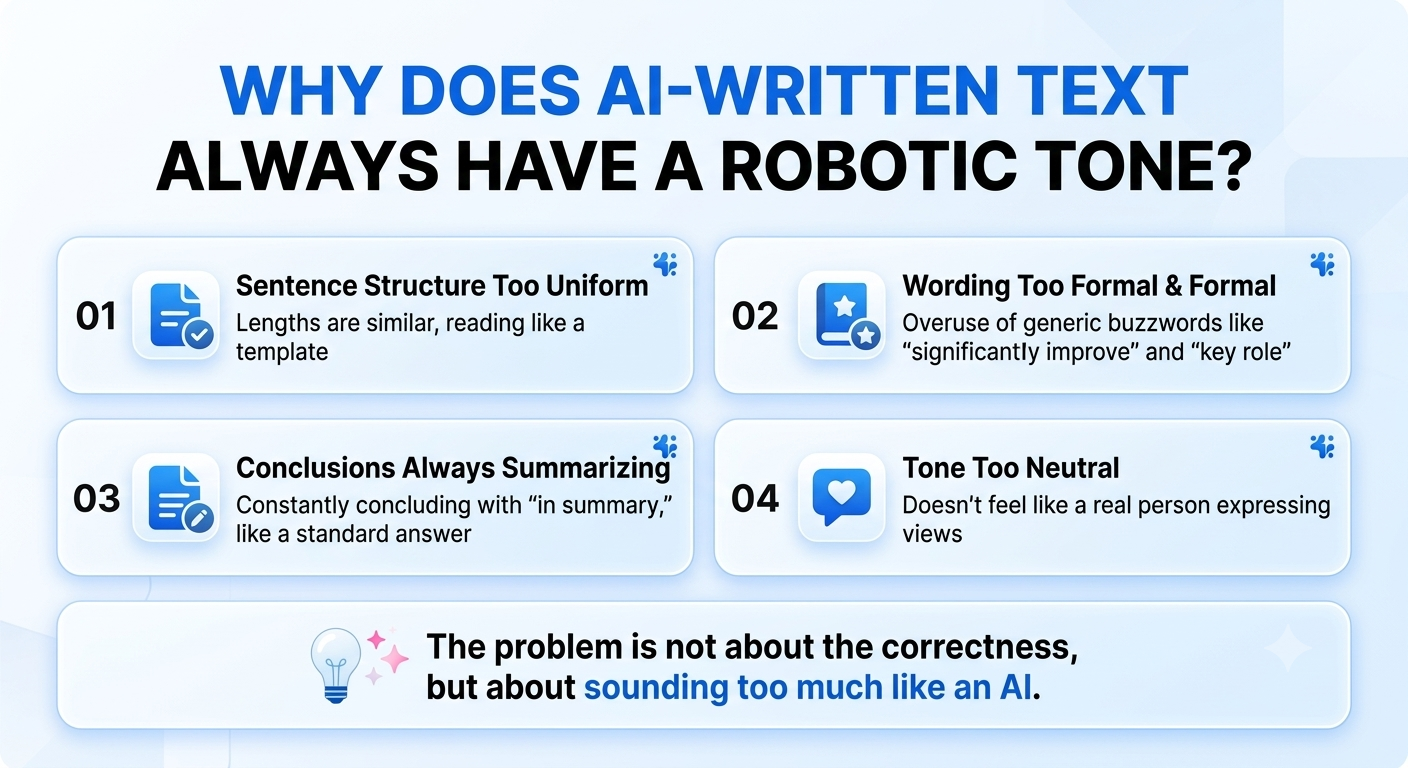
Large language models often produce writing with:

  • too many transition phrases
  • polished academic wording
  • repetitive paragraph patterns
  • overly complete conclusions
    This prompt removes many of those common characteristics and produces text that feels more straightforward.

Step 3: Add Personal Perspective

The next prompt encourages the writing to sound less generic by introducing domain-specific thinking.

1
Act as a researcher in the field of [your field]. Rewrite the following text, incorporating personalized insights and critical thinking. Include specific examples or hypothetical data from a personal research experience to make the content more authentic and persuasive.

This prompt helps because it introduces elements that generic AI writing often lacks:

  • individual observations
  • discipline-specific language
  • critical analysis
  • concrete examples
  • realistic scenarios
    Try both rewritten versions and keep whichever reads more naturally.
    At this stage, many papers already become much more readable.
    However, papers with very high initial AI indications often still need additional editing.

Step 4: Manual Editing Is the Most Important Part

This is the step many people skip.
Even after ChatGPT rewrites the content, the writing may still follow predictable sentence structures.
Instead of making small word substitutions, completely restructure the sentences.
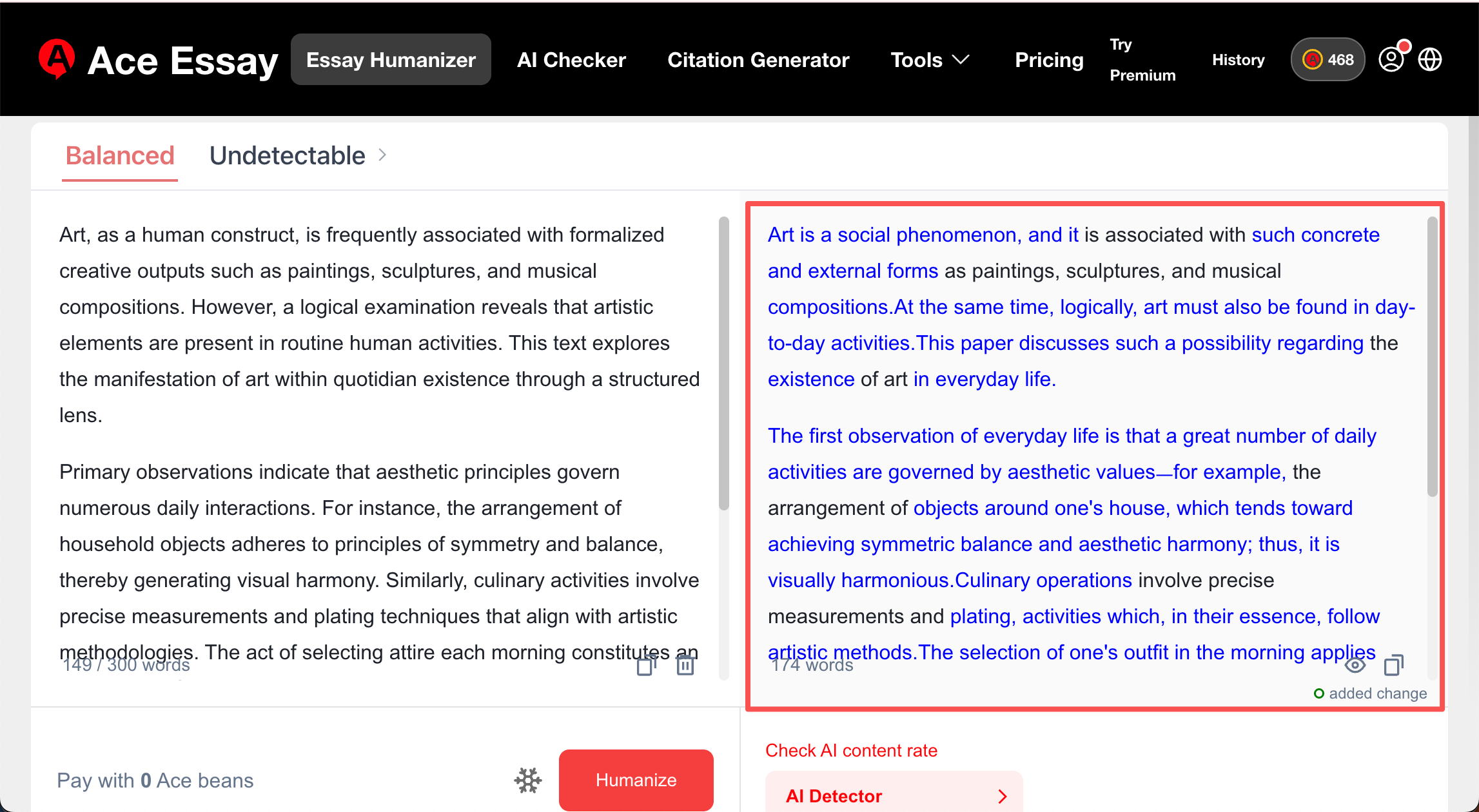
A good Humanizer tool can help you:

  • rewrite entire sentence structures
  • vary sentence length naturally
  • improve paragraph flow
  • remove repetitive wording
  • preserve the original meaning while making the writing sound more human
    The goal isn’t simply to replace words.
    The goal is to make the writing resemble how people naturally explain ideas.
    Human writing usually includes:
  • uneven sentence lengths
  • occasional informal phrasing
  • varied paragraph rhythm
  • smoother transitions based on ideas rather than templates
    These characteristics are difficult to reproduce through simple synonym replacement alone.

Step 5: Check Again Before Submission

Before submitting your paper, run one final review.
Look for:

  • repeated sentence patterns
  • awkward wording
  • unnatural transitions
  • inconsistent tone
  • formatting issues
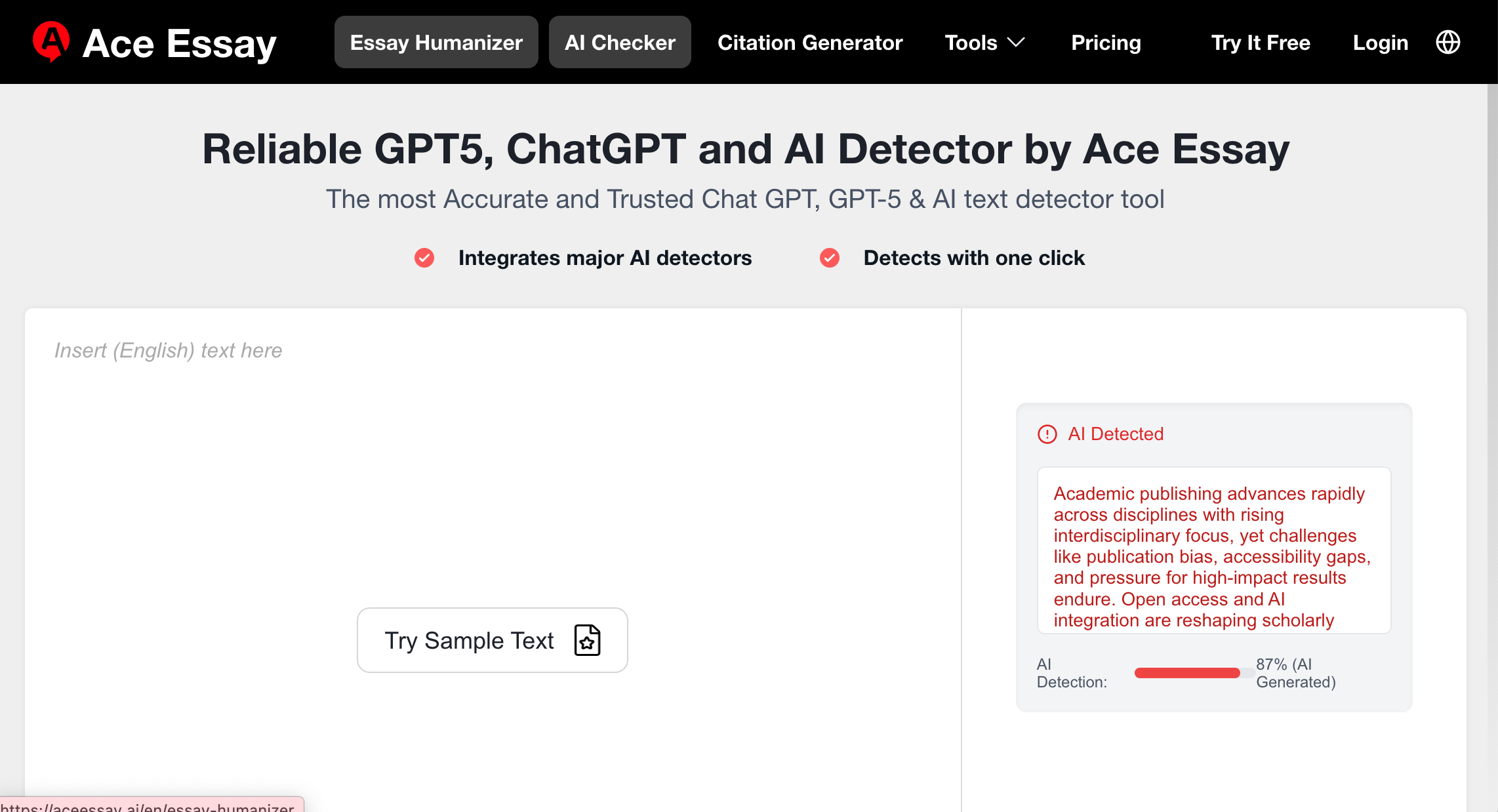
    You can also use reputable AI writing analysis tools as an additional proofreading step to identify passages that may still read as overly machine-generated.
    Remember that these tools provide estimates rather than definitive judgments, and different systems may produce different results.

  1. Review the Turnitin report and identify the highlighted sections.
  2. Rewrite those passages using the simplification prompt.
  3. Generate a second version using the researcher-style prompt.
  4. Compare both versions and choose the clearer one.
  5. Manually rewrite sentence structures instead of making simple word substitutions.
  6. Use a Humanizer tool to improve flow and readability where appropriate.
  7. Proofread carefully and verify originality before submitting.

Final Thoughts

As AI writing detectors continue to evolve, relying on a single prompt or shortcut is unlikely to produce consistently good results.
The strongest approach is to treat AI as a drafting assistant rather than a replacement for your own writing process. Revising structure, adding authentic reasoning, and carefully editing for clarity will generally produce work that is both higher quality and more representative of your own voice.
Ultimately, the goal should be to submit writing that is accurate, original, and genuinely reflects your understanding of the subject.

Disclaimer: AI detection systems evolve constantly, and no method can guarantee a specific score or outcome. The workflow below focuses on improving readability, originality, and authentic writing rather than attempting to “beat” any detection system. Always follow your institution’s academic integrity policies.


Comparison showing AI-generated text beside a revised human-style paragraph with editing notes

Turnitin Changed. The Old Tricks No Longer Work.

If you’ve recently checked a paper in Turnitin, you’ve probably noticed something frustrating.
Methods that worked a few months ago suddenly stopped working.
Why?
Because Turnitin continuously updates its AI writing detection models. As the detection algorithm evolves, many older prompting strategies and “AI bypass” techniques become much less effective.
After dozens of rounds of testing on different essays, I eventually found a workflow that consistently produced writing that was more natural, easier to read, and significantly less likely to be flagged as overly AI-like.
Here is the workflow I personally use.

Step 1: Identify Which Sections Need Revision

Before rewriting anything, examine your Turnitin AI Writing report carefully.
Don’t immediately rewrite the entire essay.
Instead, identify the paragraphs or sections that receive the highest AI writing indication.
Usually these sections contain patterns like:

  • perfectly structured paragraphs
  • repetitive sentence openings
  • excessive transition words
  • overly formal wording
  • predictable sentence rhythm
  • generic conclusions
    Once you’ve identified these passages, rewrite only the problematic sections first.
    This saves a huge amount of time.

Step 2: Use ChatGPT to Simplify the Writing

Instead of asking ChatGPT to completely regenerate the article, ask it to simplify and normalize the language.
One prompt that works surprisingly well is:

1
Replace all transition words and conjunctions in the sentences with the most basic and commonly used ones. Use simple expressions, avoiding complex vocabulary. Ensure the logical connections between sentences are clear. Delete the conclusion part at the end of the text.

Why does this help?
Large language models often produce writing with:

  • too many transition phrases
  • polished academic wording
  • repetitive paragraph patterns
  • overly complete conclusions
    This prompt removes many of those common characteristics and produces text that feels more straightforward.

Step 3: Add Personal Perspective

The next prompt encourages the writing to sound less generic by introducing domain-specific thinking.

1
Act as a researcher in the field of [your field]. Rewrite the following text, incorporating personalized insights and critical thinking. Include specific examples or hypothetical data from a personal research experience to make the content more authentic and persuasive.

This prompt helps because it introduces elements that generic AI writing often lacks:

  • individual observations
  • discipline-specific language
  • critical analysis
  • concrete examples
  • realistic scenarios
    Try both rewritten versions and keep whichever reads more naturally.
    At this stage, many papers already become much more readable.
    However, papers with very high initial AI indications often still need additional editing.

Step 4: Manual Editing Is the Most Important Part

This is the step many people skip.
Even after ChatGPT rewrites the content, the writing may still follow predictable sentence structures.
Instead of making small word substitutions, completely restructure the sentences.
A good Humanizer tool can help you:

  • rewrite entire sentence structures
  • vary sentence length naturally
  • improve paragraph flow
  • remove repetitive wording
  • preserve the original meaning while making the writing sound more human
    The goal isn’t simply to replace words.
    The goal is to make the writing resemble how people naturally explain ideas.
    Human writing usually includes:
  • uneven sentence lengths
  • occasional informal phrasing
  • varied paragraph rhythm
  • smoother transitions based on ideas rather than templates
    These characteristics are difficult to reproduce through simple synonym replacement alone.

Step 5: Check Again Before Submission

Before submitting your paper, run one final review.
Look for:

  • repeated sentence patterns
  • awkward wording
  • unnatural transitions
  • inconsistent tone
  • formatting issues
    You can also use reputable AI writing analysis tools as an additional proofreading step to identify passages that may still read as overly machine-generated.
    Remember that these tools provide estimates rather than definitive judgments, and different systems may produce different results.

  1. Review the Turnitin report and identify the highlighted sections.
  2. Rewrite those passages using the simplification prompt.
  3. Generate a second version using the researcher-style prompt.
  4. Compare both versions and choose the clearer one.
  5. Manually rewrite sentence structures instead of making simple word substitutions.
  6. Use a Humanizer tool to improve flow and readability where appropriate.
  7. Proofread carefully and verify originality before submitting.

Final Thoughts

As AI writing detectors continue to evolve, relying on a single prompt or shortcut is unlikely to produce consistently good results.
The strongest approach is to treat AI as a drafting assistant rather than a replacement for your own writing process. Revising structure, adding authentic reasoning, and carefully editing for clarity will generally produce work that is both higher quality and more representative of your own voice.
Ultimately, the goal should be to submit writing that is accurate, original, and genuinely reflects your understanding of the subject.


Useful Tools

One of the most common misconceptions is that the AI percentage represents the probability that a student cheated. It doesn’t.
Instead, the percentage estimates how much of the submitted text exhibits linguistic patterns consistent with AI-generated writing.
TurnitinDetect
Here’s a practical interpretation of the score ranges.

AI Score What It Generally Means
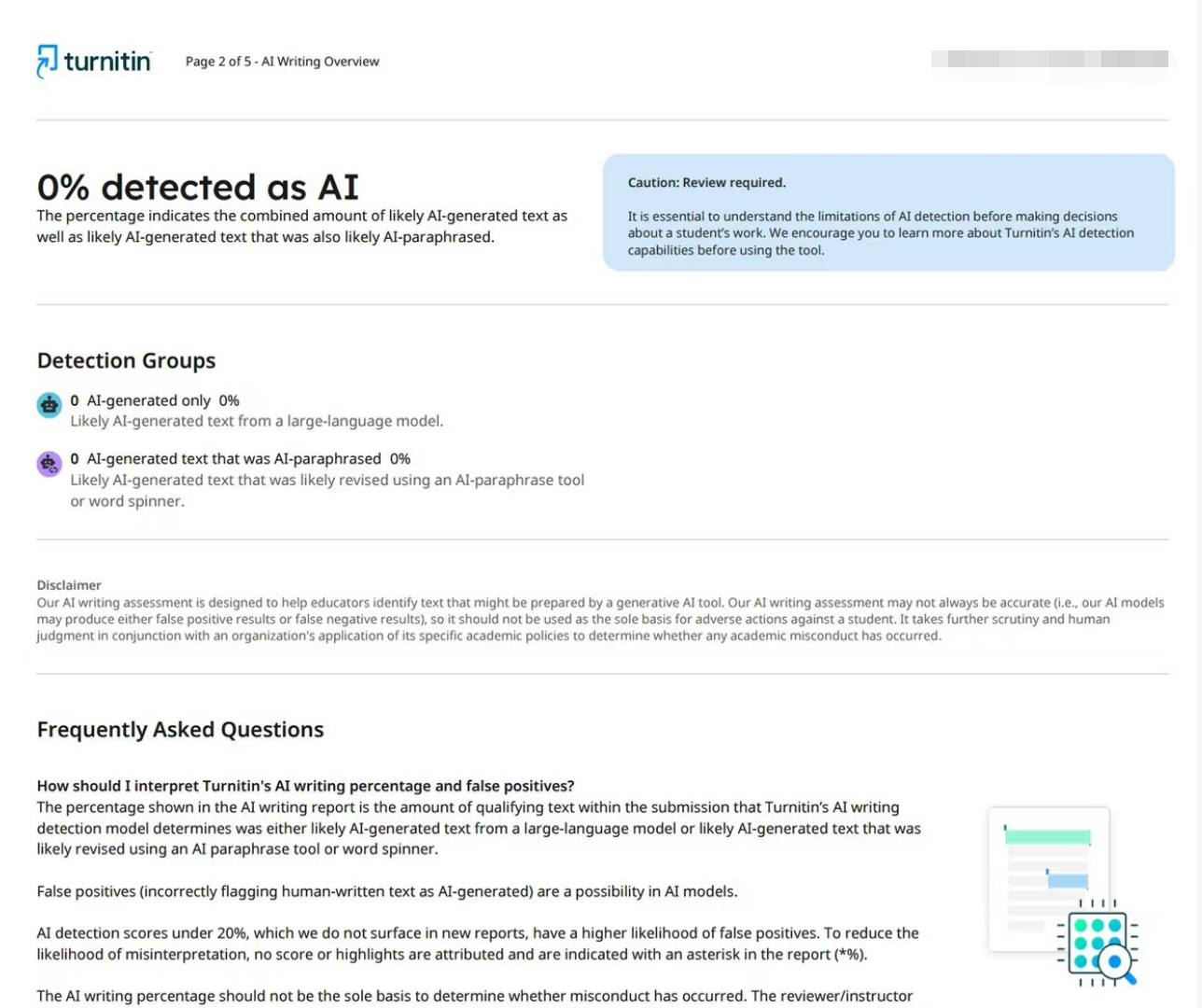
0% No AI-generated writing was detected with sufficient confidence. Entirely human-written or below detection threshold.
1–20% Very little text resembles AI writing. This often occurs naturally because common phrases, definitions, or formulaic language appear in many academic papers.
21–40% Some passages display AI-like characteristics. This is not unusual for well-structured academic writing and should be reviewed rather than assumed to be AI-generated.
41–60% A noticeable portion of the document contains language patterns associated with AI writing. Human review becomes increasingly important.
61–80% A substantial amount of the text is predicted to resemble AI-generated writing. Additional context and evidence should be considered before drawing conclusions.
81–100% Most of the document demonstrates characteristics commonly associated with AI-generated content. Even so, this is not definitive proof that AI was used.

What Turnitin’s AI Writing Percentage Measures

Turnitin’s AI writing indicator focuses on text characteristics, not user behavior.
Specifically, it analyzes features such as:

  • Sentence predictability
  • Linguistic consistency
  • Vocabulary distribution
  • Writing rhythm
  • Structural repetition
  • Statistical language patterns
    Large language models like ChatGPT tend to produce highly fluent and statistically predictable text. Turnitin’s detector attempts to recognize these patterns across longer passages.
    Importantly, the percentage does not measure intent.
    A student who used AI extensively and carefully revised the output may receive a relatively low score, while an experienced academic writer producing highly formal prose could receive a higher score than expected.
    The indicator therefore reflects text similarity to AI-generated language, not actual AI usage.

What the AI Percentage Is Not

Understanding what the score doesn’t represent is just as important.
The AI percentage is not:

  • A plagiarism score
  • A certainty score
  • Proof that AI tools were used
  • A disciplinary recommendation
  • A measure of academic integrity
  • Evidence of intentional misconduct
    For example, a paper showing 70% AI writing is not saying there is a 70% chance the student used ChatGPT.
    Likewise, a 0% score does not guarantee that AI was never involved. It simply means the submitted text did not exhibit enough detectable AI writing patterns.
    Think of the indicator as a screening tool, similar to plagiarism matching. It highlights content that deserves closer review rather than delivering a final verdict.

How Turnitin’s AI Indicator Works (High-Level)

Your Secret Weapon—Humanize AI & Beat TurnitinDetect
Turnitin has not publicly disclosed its complete detection algorithms, but its overall approach can be understood at a high level.
Rather than searching for specific AI-generated phrases, the system evaluates statistical characteristics across larger sections of text.
The process generally involves:

  1. Breaking the submission into analyzable text segments.
  2. Examining linguistic and statistical writing patterns.
  3. Comparing those patterns with characteristics commonly observed in AI-generated writing.
  4. Calculating an overall percentage of text that appears consistent with those patterns.
    The system is designed to reduce false positives by avoiding conclusions based on isolated sentences. Instead, it evaluates writing across longer passages where AI-generated patterns become more statistically meaningful.
    This explains why very short assignments or documents containing limited original writing may not receive an AI score at all.

Practical Guidance for Educators

Turnitin AI Detection
Try it now!
The most effective way to use Turnitin’s AI indicator is as one piece of a broader academic integrity review.
Rather than focusing solely on the percentage, educators should consider additional evidence, including:

  • The student’s previous writing style
  • Draft history and revision records
  • Writing process documentation
  • In-class writing samples
  • Source citations and references
  • Opportunities for the student to explain their work
    A high AI score should begin a conversation—not end one.
    Similarly, a low score should not automatically eliminate concerns if other evidence suggests inappropriate AI assistance.
    Ultimately, academic integrity decisions are strongest when they combine technology with professional judgment. AI detection tools provide valuable insights, but they work best when interpreted alongside context, evidence, and educator expertise.

Final Thoughts

Turnitin’s AI Detection Score is best understood as a risk indicator rather than a verdict. It estimates how much of a document resembles AI-generated writing based on linguistic patterns, but it cannot determine authorship, intent, or academic honesty on its own.
Whether the score is 0% or 100%, the number should always be interpreted carefully and in context. By understanding what the AI percentage measures—and what it does not—educators can make more informed, fair, and balanced decisions while supporting responsible use of AI in education.

TurnitinDetect

The Nightmare: Your AI Essay Just Got Flagged

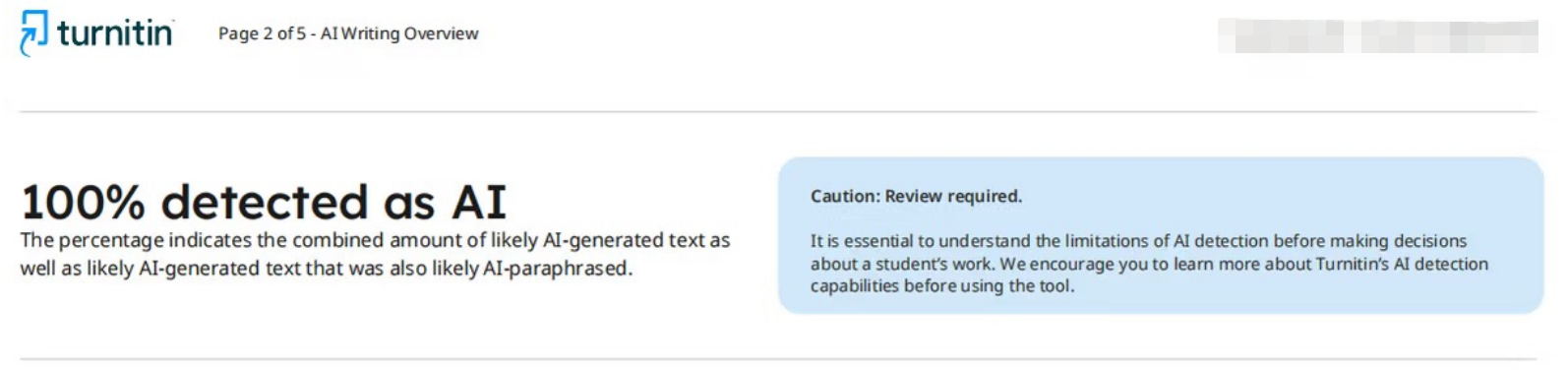
Picture this: You’ve spent hours crafting what you thought was the perfect essay. You ran it through Turnitin just to check, and boom—100% AI DETECTED. Your heart sinks. Your professor sees that red flag. And your deadline? Still tomorrow.
Sound familiar? You’re not alone.

Essay Writing Outline Guidance (Without Losing Your Mind)

Let’s be real—writing a solid essay doesn’t have to feel like climbing Mount Everest. Here’s a battle-tested outline that actually works:

  1. Hook ‘Em – Start with a killer introduction that makes your reader curious
  2. Thesis Statement – One clear sentence that sums up your entire argument
  3. Body Paragraphs – Each with a topic sentence, evidence, and analysis
  4. Counter-Arguments – Address the opposition (shows you’re smart!)
  5. Conclusion – Tie it all together with a bow
    The key? Structure your thoughts before you write. Spend 10 minutes on an outline, save yourself hours of rewrites. According to Turnitin’s latest research, students who use structured outlines have significantly fewer issues with AI detection because the writing flows more naturally from genuine critical thinking.

The Brutal Truth About AI-Generated Essays

The Brutal Truth About AI-Generated Essays
Okay, let’s talk about the elephant in the room. AI writing has a tell.
By October 2025, approximately 15% of essay submissions processed by Turnitin contained more than 80% AI-generated writing—and the detection tools are getting scary good at spotting it.
Here’s what makes AI essays give themselves away:

🔴 The “Too Perfect” Problem

AI writing is grammatically flawless. Every sentence structure is pristine. Every word choice is optimized. And that’s exactly the problem—real human writing has rhythm, personality, and yes, occasional imperfections.

🔴Too Neat Formatting

AI tends to produce text with:

  • Perfectly balanced paragraphs
  • Identical sentence lengths
  • Predictable transitions (“Furthermore,” “Moreover,” “In conclusion”)
  • Generic academic phrasing

🔴Lacks Deep Analysis

AI can regurgitate information, but it struggles with genuine critical thinking. Your professor wants to see your voice, your interpretation, your unique take on the topic.

Your Secret Weapon—Humanize AI & Beat TurnitinDetect ☕

Your Secret Weapon—Humanize AI & Beat TurnitinDetect
What if we told you there’s a better way?
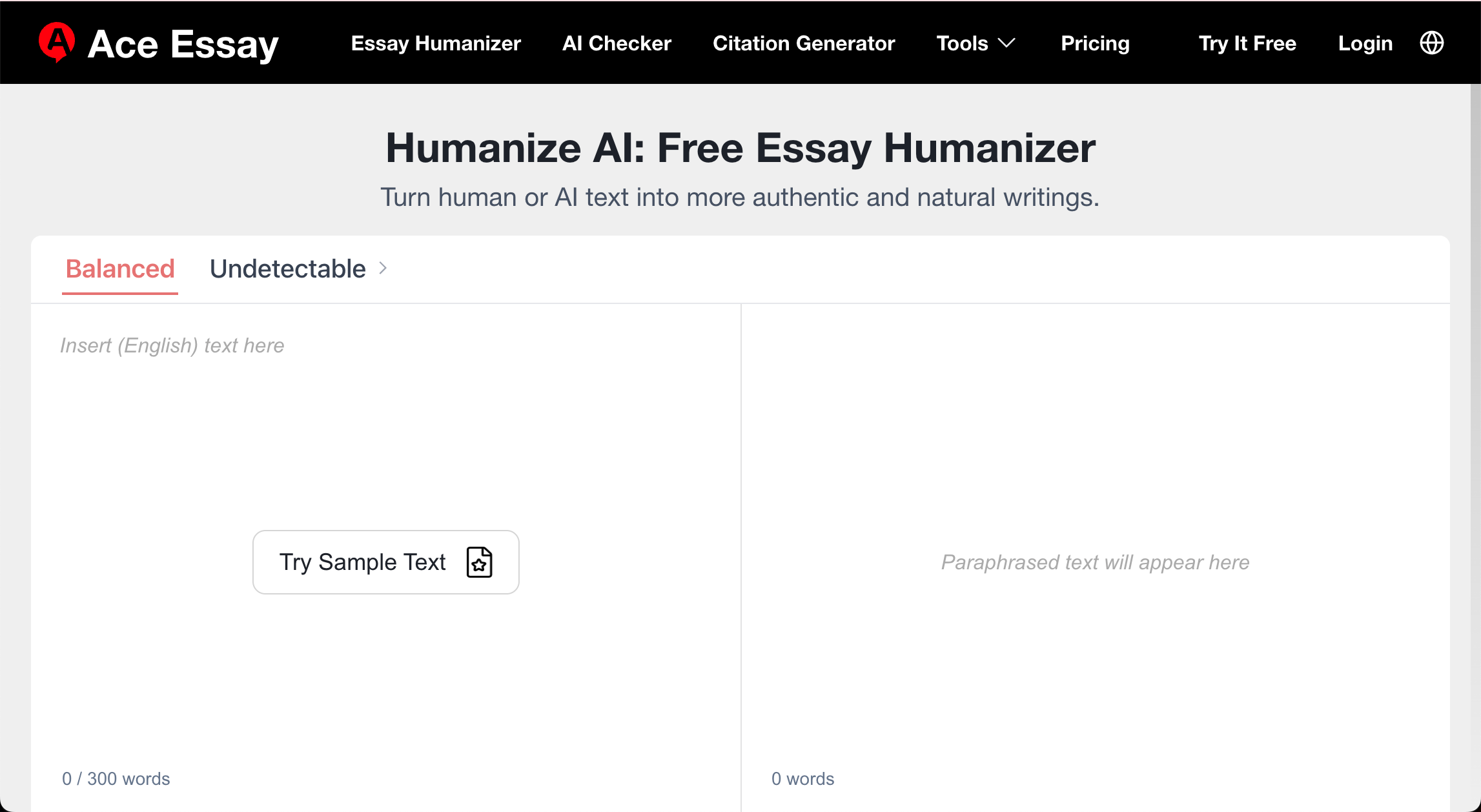
Introducing our Humanize Tool—designed specifically for students who are racing against deadlines. Here’s the magic:
alt text

✨ What Our Tool Does:

  1. Rewrites AI-generated content to sound more natural and human
  2. Varies sentence structures to match authentic writing patterns
  3. Adds personality without losing your core message
  4. Maintains academic quality while reducing the “AI fingerprint”

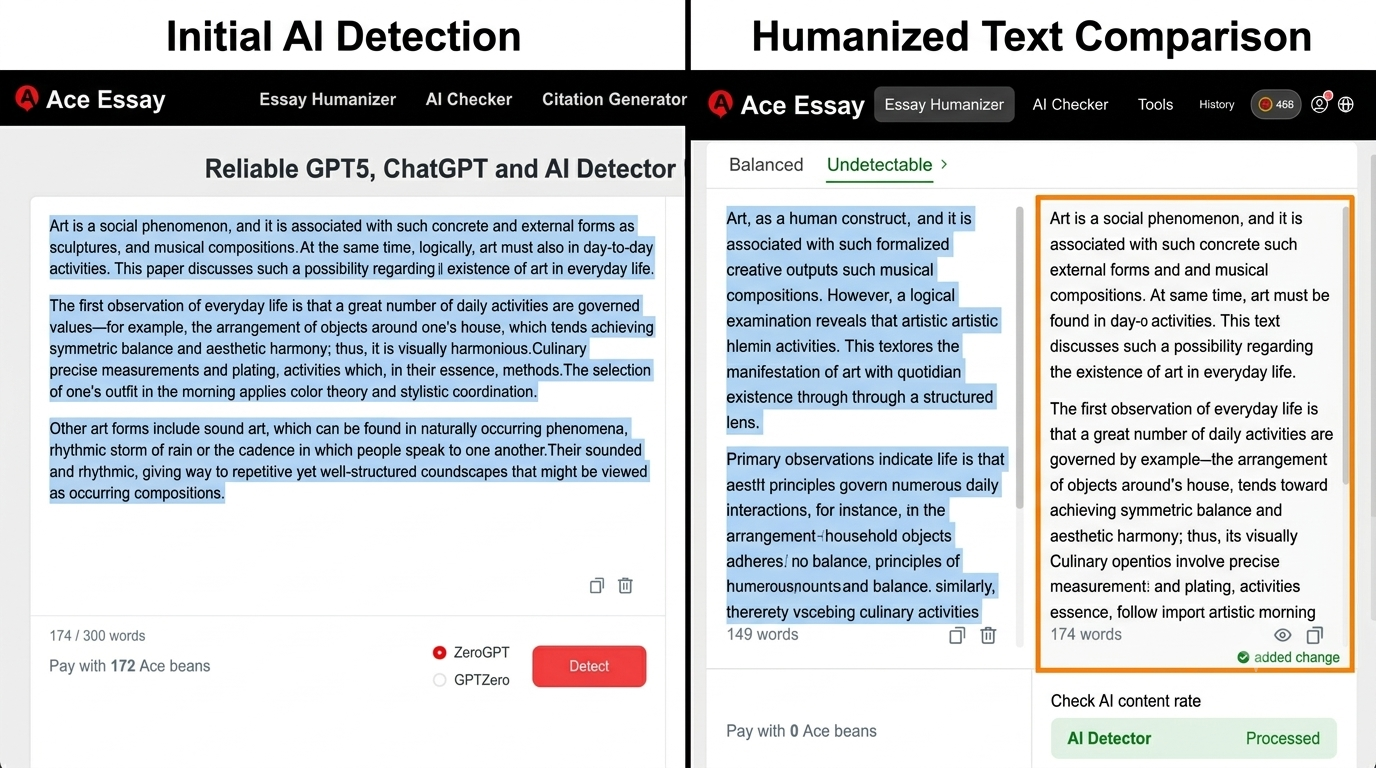
🛠️ Built-In Turnitin Detection Check

Here’s the best part: We included Turnitin detection functionality right in our tool.
Detection
You can:

  • Paste your AI-generated essay
  • Run the humanization process
  • Instantly check if it still flags as AI before you submit
  • Adjust and refine until you’re in the clear
    It’s like having a coffee break while your essay gets humanized. One cup of coffee (or tea—no judgment) later, you’re ready to submit with confidence.

Why This Matters

Let’s be honest: sometimes you need help getting started. Sometimes the blank page is paralyzing. Our tool isn’t about cheating—it’s about polishing your work to meet academic standards while keeping your authentic voice front and center.

Final Thoughts: Work Smarter, Not Harder

The academic world is evolving. AI detection tools like Turnitin are here to stay, and they’re getting more sophisticated by the day. But so are the tools that help you present your best work.
Remember:

  • Use AI as a starting point, not the final product
  • Always add your own voice and analysis
  • Let our Humanize tool handle the technical “AI smell”
  • Submit with confidence before that deadline hits

Ready to Try It?

Don’t let AI detection anxiety ruin your night. Grab your coffee, humanize your essay, and crush that deadline.
Your future self will thank you. 🎓

Introduction

The academic landscape has been fundamentally transformed by artificial intelligence. As AI writing tools like ChatGPT, Gemini, and other large language models become increasingly sophisticated, educational institutions face unprecedented challenges in maintaining academic integrity. At the center of this technological tug-of-war stands Turnitin—the industry-standard plagiarism detection software—and a new generation of tools known as “humanizers” designed to bypass AI detection systems. This article explores the complex relationship between these technologies, the ethical implications, and what it means for the future of academic honesty.
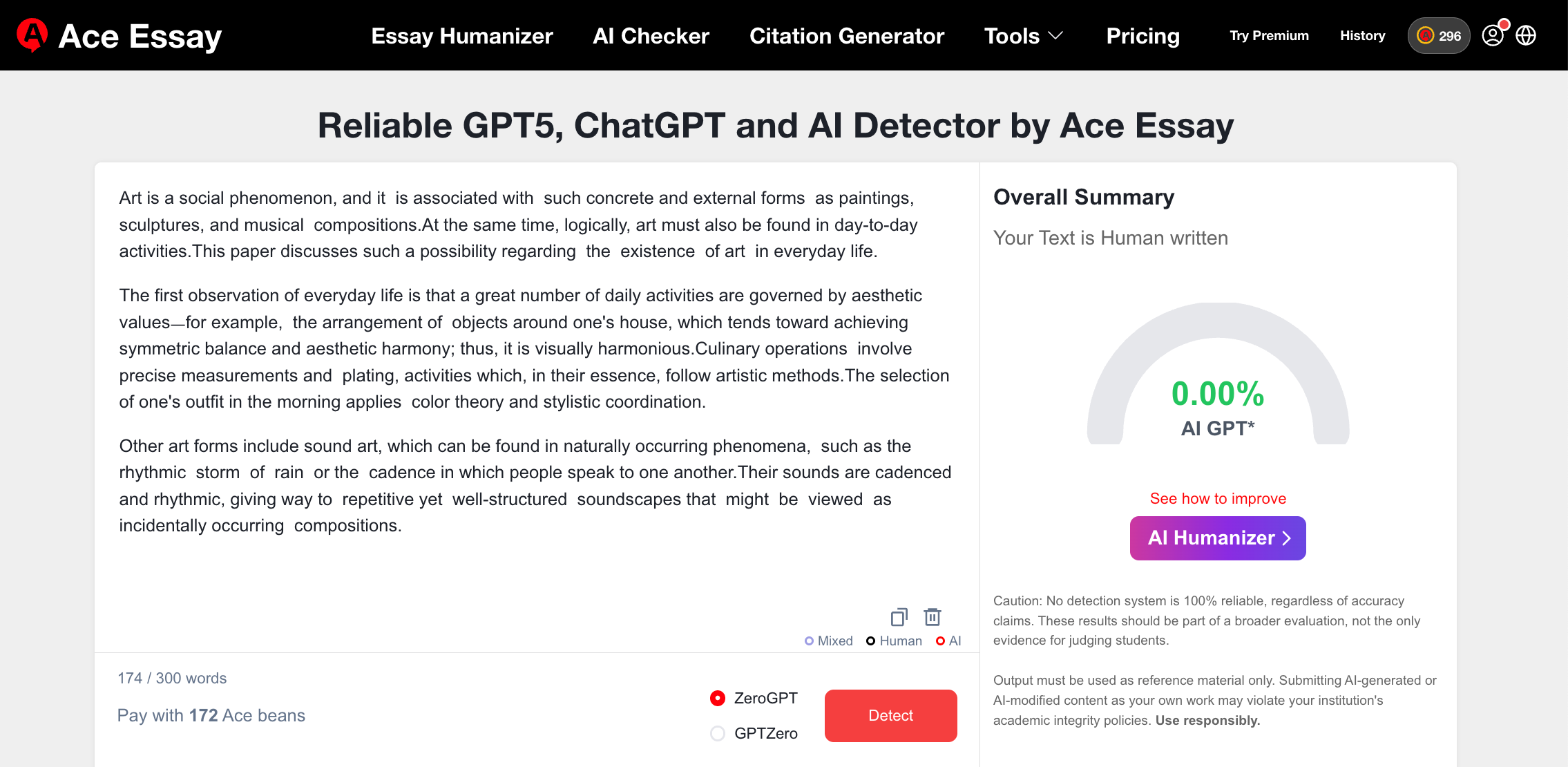
Ace aceessay and aceessay.ai and Turnitin Detector

Understanding Turnitin’s AI Detection Capabilities

Turnitin has evolved far beyond its original purpose of detecting copied text. In response to the surge of AI-generated content, the platform developed sophisticated AI detection capabilities that analyze writing patterns to identify machine-produced text.
According to Turnitin’s official resources, their AI writing detection tool is designed to “ensure academic integrity” by identifying content generated by AI systems. The technology examines various linguistic features, including sentence structure variability, word choice patterns, and writing flow characteristics that typically differ between human and AI-generated content.
In August 2024, Turnitin announced significant expansions to its offerings, including AI-powered grading tools and enhanced classroom digitization solutions. These updates reflect the platform’s commitment to adapting to the rapidly changing educational technology landscape.
However, Turnitin’s AI detector hasn’t been without controversy. Reports indicate that the platform updated its AI detector after widespread student and faculty concerns over false positives, opaque scoring methods, and equity issues. The update focused on implementing stricter confidence thresholds and providing clearer reporting to address these valid concerns.
Ace aceessay and aceessay.ai and humanizer

The Rise of AI Humanizer Tools

In direct response to AI detection technology, a new market has emerged: AI humanizer tools. These services claim to transform AI-generated content into text that bypasses detection systems, essentially “humanizing” machine-produced writing.
Websites like HumanizeAI.io and Humanize.ai offer free online tools that promise to convert AI-generated content into “human-like, engaging text.” These platforms typically use advanced paraphrasing techniques that modify sentence structures, alter word choices, and introduce subtle imperfections meant to mimic natural human writing patterns.
According to one analysis, tools like GPTinf and similar humanizers have achieved reported human-likeness scores of 95-98% on various detection platforms. Some humanizers even market specific features like “bypass Turnitin” modes, directly targeting educational integrity systems.
The technology behind these tools goes far beyond simple paraphrasing. As noted by Humanize AI’s marketing, these services understand “sentence rhythm, word choice patterns, and subtle imperfections that make writing actually feel human”—a concerning development for academic institutions.

The Ethical and Practical Implications

Student Concerns and False Positives

Perhaps the most troubling aspect of this technological arms race is the impact on legitimate students. Research has shown that Turnitin’s AI detection has falsely flagged legitimate student work, raising serious questions about the reliability of these systems.
A recent report by the UK’s Office of the Independent Adjudicator (OIA) documented cases where university sanctions were overturned after students were wrongly accused of using AI-generated content. Vanderbilt University went so far as to disable Turnitin’s AI detector entirely in August 2023 after months of testing revealed significant reliability issues.
Some students have been affected more than others. Research indicates that non-native English speakers and students who write in a more structured, formal style are disproportionately flagged by AI detection tools—a troubling equity concern that undermines the fairness of these systems.

Academic Integrity at Stake

The existence of humanizer tools fundamentally challenges the concept of academic integrity. When students can easily circumvent detection systems, the educational value of writing assignments becomes questionable. The purpose of academic writing—to develop critical thinking, research skills, and the ability to articulate ideas—becomes hollow when the actual writing can be outsourced to machines.
Educational institutions face a difficult balancing act. They must:

  • Adapt to new technologies without completely prohibiting AI assistance
  • Maintain academic standards while recognizing the changing nature of writing
  • Protect legitimate students from false accusations
  • Develop fair assessment methods that account for AI’s role in modern workflows

The Arms Race Continues

The relationship between Turnitin and humanizer tools represents a classic technological arms race. As detection methods improve, evasion techniques become more sophisticated, and vice versa. This dynamic creates an unstable environment where neither technology can provide definitive answers.
Turnitin’s approach has been to continuously update its detection models as new large language models are released. According to industry analysis, the platform’s AI detection capabilities evolve on a regular cadence to keep pace with emerging AI systems. However, humanizer tools quickly adapt to these changes, creating a seemingly endless cycle.
Some experts question whether this arms race is ultimately winnable. The fundamental challenge is that AI writing detection and AI writing generation rely on similar underlying technologies—natural language processing and machine learning—which means each side can potentially anticipate the other’s methods.

Recommendations for Students and Educators

For Students

  1. Understand your institution’s policies regarding AI assistance and always disclose when you’ve used AI tools
  2. Focus on learning rather than detection-bypassing—the skills you develop matter more than any single assignment
  3. If falsely accused, know your rights and be prepared to provide evidence of your writing process
  4. Use AI as a learning aid, not a replacement for your own intellectual contribution

For Educators

  1. Rethink assessment methods to focus on processes rather than final products
  2. Diversify evaluation criteria to include oral presentations, drafts, and collaborative work
  3. Stay informed about both AI capabilities and detection limitations
  4. Consider disabling AI detection if your institution’s experience mirrors Vanderbilt’s concerns
  5. Communicate clearly with students about acceptable AI use in your courses

Conclusion

The battle between Turnitin and humanizer tools represents a microcosm of larger questions about authenticity, technology, and education in the AI age. While detection tools like Turnitin continue to evolve in response to AI-generated content, humanizer tools persistently push back, creating an ongoing technological chess match with real consequences for students and educators alike.
The most prudent path forward may not be found in more sophisticated detection or evasion technologies, but in a fundamental rethinking of what academic assignments are meant to accomplish. As AI becomes increasingly integrated into professional and personal life, educational institutions must adapt their assessment methods to emphasize skills that AI cannot replicate: critical thinking, creativity, emotional intelligence, and authentic human connection.
Until then, the arms race between Turnitin and humanizers will continue—a race that ultimately serves neither educational excellence nor genuine academic integrity. The question is not whether we can detect AI-written content, but whether we can cultivate the intellectual growth that makes such detection necessary.
Key Takeaways:

  • Turnitin’s AI detection has faced criticism for false positives and equity issues
  • Humanizer tools claim to bypass detection with high success rates
  • Both technologies are engaged in an ongoing arms race
  • The ethical implications extend far beyond simple detection vs. evasion
  • The ultimate solution may require reimagining academic assessment rather than improving detection

Introduction

The academic landscape has been fundamentally transformed by artificial intelligence. As AI writing tools like ChatGPT, Gemini, and other large language models become increasingly sophisticated, educational institutions face unprecedented challenges in maintaining academic integrity. At the center of this technological tug-of-war stands Turnitin—the industry-standard plagiarism detection software—and a new generation of tools known as “humanizers” designed to bypass AI detection systems. This article explores the complex relationship between these technologies, the ethical implications, and what it means for the future of academic honesty.
Ace aceessay and aceessay.ai and Turnitin Detector

Understanding Turnitin’s AI Detection Capabilities

Turnitin has evolved far beyond its original purpose of detecting copied text. In response to the surge of AI-generated content, the platform developed sophisticated AI detection capabilities that analyze writing patterns to identify machine-produced text.
According to Turnitin’s official resources, their AI writing detection tool is designed to “ensure academic integrity” by identifying content generated by AI systems. The technology examines various linguistic features, including sentence structure variability, word choice patterns, and writing flow characteristics that typically differ between human and AI-generated content.
In August 2024, Turnitin announced significant expansions to its offerings, including AI-powered grading tools and enhanced classroom digitization solutions. These updates reflect the platform’s commitment to adapting to the rapidly changing educational technology landscape.
However, Turnitin’s AI detector hasn’t been without controversy. Reports indicate that the platform updated its AI detector after widespread student and faculty concerns over false positives, opaque scoring methods, and equity issues. The update focused on implementing stricter confidence thresholds and providing clearer reporting to address these valid concerns.
Ace aceessay and aceessay.ai and Turnitin Detector

The Rise of AI Humanizer Tools

In direct response to AI detection technology, a new market has emerged: AI humanizer tools. These services claim to transform AI-generated content into text that bypasses detection systems, essentially “humanizing” machine-produced writing.
Websites like HumanizeAI.io and Humanize.ai offer free online tools that promise to convert AI-generated content into “human-like, engaging text.” These platforms typically use advanced paraphrasing techniques that modify sentence structures, alter word choices, and introduce subtle imperfections meant to mimic natural human writing patterns.
According to one analysis, tools like GPTinf and similar humanizers have achieved reported human-likeness scores of 95-98% on various detection platforms. Some humanizers even market specific features like “bypass Turnitin” modes, directly targeting educational integrity systems.
The technology behind these tools goes far beyond simple paraphrasing. As noted by Humanize AI’s marketing, these services understand “sentence rhythm, word choice patterns, and subtle imperfections that make writing actually feel human”—a concerning development for academic institutions.

The Ethical and Practical Implications

Student Concerns and False Positives

Perhaps the most troubling aspect of this technological arms race is the impact on legitimate students. Research has shown that Turnitin’s AI detection has falsely flagged legitimate student work, raising serious questions about the reliability of these systems.
A recent report by the UK’s Office of the Independent Adjudicator (OIA) documented cases where university sanctions were overturned after students were wrongly accused of using AI-generated content. Vanderbilt University went so far as to disable Turnitin’s AI detector entirely in August 2023 after months of testing revealed significant reliability issues.
Some students have been affected more than others. Research indicates that non-native English speakers and students who write in a more structured, formal style are disproportionately flagged by AI detection tools—a troubling equity concern that undermines the fairness of these systems.

Academic Integrity at Stake

The existence of humanizer tools fundamentally challenges the concept of academic integrity. When students can easily circumvent detection systems, the educational value of writing assignments becomes questionable. The purpose of academic writing—to develop critical thinking, research skills, and the ability to articulate ideas—becomes hollow when the actual writing can be outsourced to machines.
Educational institutions face a difficult balancing act. They must:

  • Adapt to new technologies without completely prohibiting AI assistance
  • Maintain academic standards while recognizing the changing nature of writing
  • Protect legitimate students from false accusations
  • Develop fair assessment methods that account for AI’s role in modern workflows

The Arms Race Continues

The relationship between Turnitin and humanizer tools represents a classic technological arms race. As detection methods improve, evasion techniques become more sophisticated, and vice versa. This dynamic creates an unstable environment where neither technology can provide definitive answers.
Turnitin’s approach has been to continuously update its detection models as new large language models are released. According to industry analysis, the platform’s AI detection capabilities evolve on a regular cadence to keep pace with emerging AI systems. However, humanizer tools quickly adapt to these changes, creating a seemingly endless cycle.
Some experts question whether this arms race is ultimately winnable. The fundamental challenge is that AI writing detection and AI writing generation rely on similar underlying technologies—natural language processing and machine learning—which means each side can potentially anticipate the other’s methods.

Recommendations for Students and Educators

For Students

  1. Understand your institution’s policies regarding AI assistance and always disclose when you’ve used AI tools
  2. Focus on learning rather than detection-bypassing—the skills you develop matter more than any single assignment
  3. If falsely accused, know your rights and be prepared to provide evidence of your writing process
  4. Use AI as a learning aid, not a replacement for your own intellectual contribution

For Educators

  1. Rethink assessment methods to focus on processes rather than final products
  2. Diversify evaluation criteria to include oral presentations, drafts, and collaborative work
  3. Stay informed about both AI capabilities and detection limitations
  4. Consider disabling AI detection if your institution’s experience mirrors Vanderbilt’s concerns
  5. Communicate clearly with students about acceptable AI use in your courses

Conclusion

The battle between Turnitin and humanizer tools represents a microcosm of larger questions about authenticity, technology, and education in the AI age. While detection tools like Turnitin continue to evolve in response to AI-generated content, humanizer tools persistently push back, creating an ongoing technological chess match with real consequences for students and educators alike.
The most prudent path forward may not be found in more sophisticated detection or evasion technologies, but in a fundamental rethinking of what academic assignments are meant to accomplish. As AI becomes increasingly integrated into professional and personal life, educational institutions must adapt their assessment methods to emphasize skills that AI cannot replicate: critical thinking, creativity, emotional intelligence, and authentic human connection.
Until then, the arms race between Turnitin and humanizers will continue—a race that ultimately serves neither educational excellence nor genuine academic integrity. The question is not whether we can detect AI-written content, but whether we can cultivate the intellectual growth that makes such detection necessary.
Key Takeaways:

  • Turnitin’s AI detection has faced criticism for false positives and equity issues
  • Humanizer tools claim to bypass detection with high success rates
  • Both technologies are engaged in an ongoing arms race
  • The ethical implications extend far beyond simple detection vs. evasion
  • The ultimate solution may require reimagining academic assessment rather than improving detection

0%