How to Read a Turnitin Report: Similarity Score & AI Indicator
Learn how to read Turnitin reports with this comprehensive guide. Understand similarity scores, color codes, and AI indicators to avoid plagiarism and boost academic writing.
Learn how to read Turnitin reports with this comprehensive guide. Understand similarity scores, color codes, and AI indicators to avoid plagiarism and boost academic writing.
Turnitin AI Score uses advanced machine learning to detect AI-generated content by analyzing linguistic patterns, helping educators maintain academic integrity.
If you’ve ever wondered “why is it called QuillBot,” the answer lies in a beautiful blend of historical symbolism and technological innovation. The name “QuillBot” is a portmanteau that combines “quill” — the traditional feather pen used for writing throughout centuries — with “bot,” a term derived from “robot,” representing automated software technology.
This naming choice was deliberate and meaningful. The quill represents the timeless art of writing, knowledge transmission, and human creativity. It evokes images of scholars, authors, and intellectuals crafting their thoughts on parchment. Meanwhile, “bot” signifies the modern, AI-powered nature of the tool — a digital assistant that helps users refine and improve their writing.
The founders of QuillBot chose this name to bridge the gap between traditional writing craftsmanship and modern artificial intelligence. It’s a nod to the evolution of writing tools from feather quills to sophisticated AI algorithms. Today, QuillBot has become one of the most popular AI-powered writing assistants, offering paraphrasing, grammar checking, and summarization features that help millions of writers worldwide.
As AI writing tools like QuillBot, grubby ai, and rewritify ai have become increasingly sophisticated, educational institutions and publishing houses have responded with their own detection tools. The arms race between AI writing generators and AI detectors has created a complex ecosystem that every writer, student, and content creator needs to understand.
This is where tools like PaperCheck.in and AceEssay.ai come into play, offering comprehensive solutions for those who want to ensure their content passes AI detection scrutiny. In this article, we’ll explore ten of the most practical Turnitin alternatives and AI detectors, comparing their features, accuracy, and effectiveness.
Turnitin remains the industry standard in academic plagiarism detection. Its AI detection capabilities have improved significantly, now identifying content generated by tools like QuillBot with remarkable accuracy. However, it requires institutional subscription and doesn’t offer individual user plans.
PaperCheck.in is one of the most reliable Turnitin alternatives available today. This comprehensive tool offers:
AceEssay.ai stands out as a specialized tool designed specifically for academic writing. Its AI checker offers:
Created by a Princeton student, GPTZero was among the first consumer-facing AI detectors. It analyzes text complexity and burstiness to determine if content is AI-generated. While effective, it’s primarily designed for English text and may struggle with shorter content pieces.
This comprehensive tool offers both AI detection and plagiarism checking in a single platform. Originality.ai is particularly popular among website owners and content agencies who need to verify the authenticity of content before publishing. It supports multiple AI models and provides team collaboration features.
Copyleaks provides enterprise-grade AI detection with support for multiple languages and file types. Its API integration makes it suitable for organizations looking to embed AI detection into their existing workflows. The tool claims high accuracy rates and offers detailed reporting features.
Positioned as an all-in-one AI writing and detection platform, Content at Scale uses a proprietary “AI + NLP + semantic analysis” engine to detect AI-generated content. It’s particularly useful for content marketers and SEO professionals who need to verify content originality.
Writer.com offers a free AI detection tool as part of its comprehensive writing platform. While not as sophisticated as dedicated detectors, it’s a good starting point for basic content verification and works well for short-form content.
Sapling focuses on real-time AI detection for customer service and communication platforms. While primarily designed for business use, its detection capabilities extend to general content verification with impressive accuracy rates.
ZeroGPT offers a straightforward, free-to-use AI detection service. It’s accessible without registration and provides instant results, making it popular among students and casual users. However, its accuracy may not match premium alternatives.
The market for AI writing assistance has exploded in recent years. Beyond QuillBot, tools like grubby ai and rewritify ai have emerged as popular alternatives for content creators seeking to refine their writing. Each tool has its strengths:
QuillBot excels at:
Modern AI detectors like Turnitin, PaperCheck.in, and AceEssay.ai use sophisticated machine learning algorithms to analyze text patterns. They examine:
Rather than attempting to “trick” AI detectors, consider these ethical approaches:
Among the crowded AI detection market, PaperCheck.in and AceEssay.ai/en/ai-checker have established themselves as particularly reliable options:
PaperCheck.in offers:
The relationship between AI writing tools and detection software will continue to evolve. As tools like QuillBot, grubby ai, and rewritify ai become more sophisticated, detection tools must adapt accordingly. Conversely, as detectors improve, AI writing tools will likely focus more on assisting human writers rather than replacing them entirely.
This evolution presents opportunities for ethical AI use in education and content creation. The key is understanding how to use these tools responsibly while maintaining the integrity of your work.
QuillBot gets its name from combining “quill” (the traditional writing instrument) with “bot” (representing AI automation). The name symbolizes the fusion of traditional writing craftsmanship with modern AI technology.
Yes, Turnitin has updated its algorithms to detect content generated or significantly modified by AI tools like QuillBot. However, thoroughly edited and personalized content is harder to detect.
Using AI tools to assist your writing is generally acceptable, but passing off AI-generated content as your own original work can be considered academic dishonesty or plagiarism depending on your institution’s policies.
PaperCheck.in and similar tools like AceEssay.ai typically achieve 85-95% accuracy rates. However, no detector is 100% perfect, and false positives can occur with heavily edited AI content.
While both are paraphrasing tools, QuillBot is more established with a broader user base, while rewritify ai offers specialized features for certain use cases. Both can be detected by advanced AI detectors.
Yes, using multiple tools like PaperCheck.in, AceEssay.ai, and Turnitin can provide more comprehensive verification. Different tools may catch different patterns.
Leading tools like Turnitin and PaperCheck.in update their detection algorithms regularly, sometimes monthly, to keep pace with evolving AI writing technologies.
Yes, tools like GPTZero, Writer.com, and ZeroGPT offer free AI detection capabilities, though they may have limitations compared to premium solutions.
Ready to verify your content’s authenticity? Try these recommended tools today:
🔍 Turnitin Detector — Comprehensive AI and plagiarism detection for students and professionals
✍️ AceEssay.ai — Advanced AI detection with detailed academic writing support
Both tools offer reliable detection capabilities that rival Turnitin at a fraction of the cost. Whether you’re a student submitting assignments, a content creator publishing articles, or a professional preparing documents, these tools will help ensure your work maintains the highest standards of originality and integrity.
The rapid advancement of artificial intelligence has fundamentally transformed how content is created, consumed, and evaluated. AI writing assistants like ChatGPT, Claude, and Gemini have become indispensable tools for content creators, students, marketers, and professionals worldwide. These powerful language models can generate articles, essays, reports, and marketing copy in seconds—tasks that would traditionally take hours or even days to complete manually.
However, as AI-generated content becomes increasingly prevalent, a new challenge has emerged: detection. Educational institutions, publishing platforms, and search engines have developed sophisticated AI detection tools to identify machine-generated text. Tools like GPTZero, Turnitin, and Originality.ai can now flag AI-written content with remarkable accuracy, creating significant concerns for users who rely on AI assistants for their writing needs.
This is where AI humanizer tools step in to revolutionize the game. These innovative solutions are designed to transform robotic, AI-generated text into natural, human-sounding content that bypasses detection algorithms while preserving the original meaning and intent. Whether you’re a student submitting an academic paper, a marketer crafting SEO content, or a professional preparing business documents, understanding these tools has become essential in today’s AI-driven landscape.
In this comprehensive guide, we’ll dive deep into the top 6 AI humanizer tools available today, providing you with detailed insights, feature comparisons, and actionable recommendations. Our analysis is based on extensive research and includes the latest tools and technologies in this rapidly evolving space.
Before we explore the specific tools, let’s understand what AI humanization actually means and why it’s become so crucial in the current digital ecosystem.
AI writing tools, despite their impressive capabilities, tend to exhibit certain patterns that detection algorithms have learned to identify:
AI humanizer tools address these issues by:
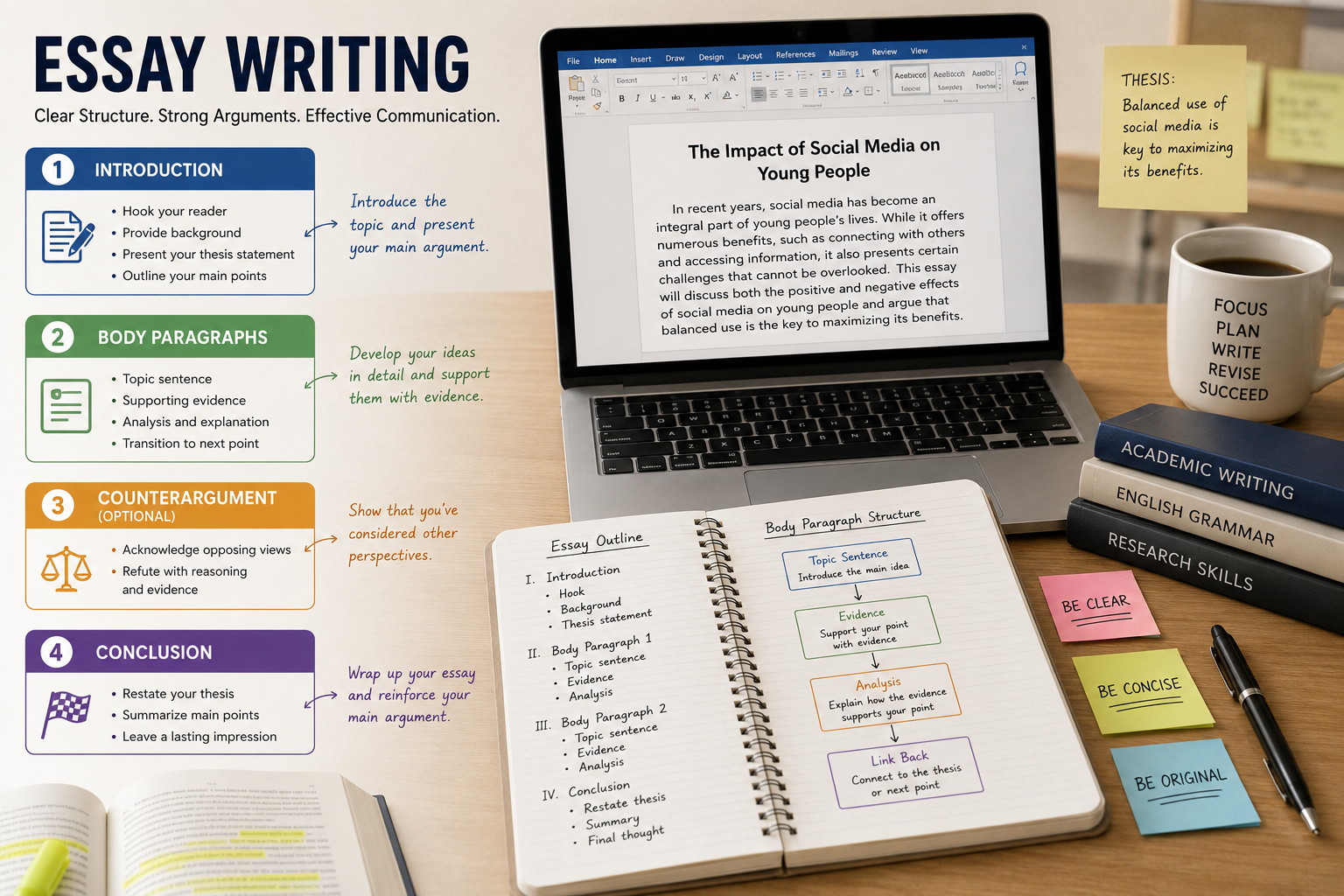
Based on extensive research and analysis of the latest market offerings, here are the six best AI humanizer tools currently available. We’ve evaluated each based on detection bypass effectiveness, output quality, features, pricing, and user experience.
Overview
AceEssay AI Humanizer (available at https://aceessay.ai/en/humanizer) is a specialized tool designed specifically for academic writing needs. It has gained significant traction among students, researchers, and academic professionals who need to humanize AI-assisted writing while maintaining scholarly integrity.
Key Features
Overview
HIX Bypass is an AI humanizer tool integrated into the broader HIX.AI platform. It has gained significant popularity due to its intuitive interface and consistent performance across various content types.
Key Features
Overview
StealthGPT is designed for users who need more control over the humanization process. It offers advanced customization options and claims to produce the most natural-sounding output in the industry.
Key Features
Overview
Undetectable AI has established itself as one of the most effective and reliable AI humanizer tools in the market. Developed with advanced natural language processing algorithms, this tool has consistently demonstrated high success rates in bypassing even the most sophisticated AI detection systems.
Key Features
Overview
Humbot offers one of the best free AI humanization solutions available today. While it may not have all the advanced features of premium tools, it provides reliable humanization that works for most everyday needs.
Key Features
Overview
HumanizeAI.io is a comprehensive AI humanization platform that combines powerful transformation capabilities with SEO optimization features, making it particularly valuable for content marketers.
Key Features

To help you make an informed decision, here’s a detailed comparison of all six tools across key metrics:
| Tool | Bypass Rate | Free Option | Starting Price | Best For | Unique Feature |
|---|---|---|---|---|---|
| AceEssay | 80-85% | Trial | $7.99/mo | Academic writing | Citation preservation |
| Undetectable AI | 85-90% | Yes | $9.99/mo | Overall reliability | Built-in detector |
| HIX Bypass | 83% | Yes | $9.99/mo | Ease of use | Multi-language |
| StealthGPT | 71-75% | Trial | $14/mo | Advanced users | API access |
| Humbot | 60-70% | Yes | Free | Budget users | No signup required |
| HumanizeAI.io | 75-80% | Yes | $12/mo | Content marketers | SEO optimization |
With so many options available, selecting the right tool can feel overwhelming. Here are the key factors to consider:
Consider the sensitivity of your content:
To maximize the effectiveness of any AI humanizer tool, follow these best practices:
The better your initial AI-generated content, the better the humanized result will be. Use advanced AI models and provide clear, detailed prompts.
No tool is perfect. Always review humanized content for:
For high-stakes content, consider:
AI detection technology evolves rapidly. Stay updated on the latest detection methods and test your content against current tools.
The AI humanization industry is rapidly evolving. Here’s what we can expect in the coming years:
While AI humanizer tools provide valuable utility, it’s important to use them responsibly:
AI humanizer tools have become essential assets in our AI-augmented writing landscape. Whether you’re a student navigating academic requirements, a content creator balancing efficiency with authenticity, or a professional seeking to optimize your workflow, these tools offer valuable solutions.
Among the six tools we’ve analyzed, Undetectable AI emerges as the best overall choice for most users, offering the highest bypass rates with reliable quality. However, your specific needs may point to a more specialized solution:
AI is reshaping academic integrity in education. Uncover Turnitin's 2024 insights on student cheating, AI misuse, and modern detection strategies.
Before we dive into the solutions, let’s quickly understand the problem. AI detectors like Turnitin, GPTZero, Originality.ai, and Winston AI analyze text patterns, sentence structure, and vocabulary to determine whether content was written by a human or generated by AI tools like ChatGPT, Claude, or Gemini.
These detectors have become incredibly sophisticated. According to recent searches, tools like Turnitin now offer AI detection features that can analyze entire documents, giving educators and publishers peace of mind about content authenticity.
The tricky part? Even perfectly good content can get flagged simply because it sounds too polished or structured — something AI writing often does.
That’s where AI humanizers come in.
Think of an AI humanizer as a text transformer. It takes your AI-generated content and rewrites it to:
Let’s get to the good stuff. Here are the 10 best tools that can help your content sound human and pass AI detection:
This is one of the most popular names in the humanizer space. Undetectable AI specializes in converting AI-generated text into content that mimics human writing patterns. It’s particularly effective against Turnitin and other mainstream detectors. Users praise its ability to maintain the original meaning while completely changing the text’s “voice.”
HIX Bypass is another powerhouse when it comes to humanizing AI content. It’s designed specifically to help content bypass detection tools while preserving quality and readability. Many users report excellent results against Originality.ai and GPTZero.
As the name suggests, Stealthly AI is all about making your content invisible to detectors. It’s particularly popular among content marketers who need to produce large volumes of content that still feels authentic.
This tool focuses on rewriting AI-generated text to sound more natural and conversational. PassMe AI is known for its efficiency in bypassing Turnitin and similar academic detection systems.
Rewritify offers a straightforward approach to humanizing content. It takes your AI text and rephrases it to include natural variations that AI detectors typically look for — things like varied sentence openings, different word choices, and organic flow.
A dedicated humanizer tool that works with various types of content. AI Humanizer Pro is praised for its ability to maintain context while transforming the text’s tone and structure.
Humbot specializes in making AI content undetectable. It’s particularly useful for content that needs to pass through multiple detection tools, including academic platforms like Turnitin.
This tool is designed specifically for bypassing AI detection in academic settings. uPass AI understands the specific patterns that Turnitin and similar tools look for, making it highly effective for student submissions.
Phrasly AI is designed to transform AI-generated content into text that mirrors human writing, aiming to bypass AI detection tools such as Turnitin and GPTZero. It’s gained popularity for its consistent results.
A free online tool that offers basic humanization features. While it may not be as sophisticated as some premium options, Humanizer.org is a great starting point for those on a budget.
| Tool | Best For | Free Option | Bypass Rate |
|---|---|---|---|
| Undetectable AI | All-around use | Limited | High |
| HIX Bypass | Content creators | Yes | Very High |
| Stealthly AI | Marketing content | Limited | High |
| PassMe AI | Academic work | Limited | High |
| Rewritify | Quick rewrites | Yes | Moderate |
| AI Humanizer Pro | Professional writers | Limited | High |
| Humbot AI | Multi-detector bypass | Limited | Very High |
| uPass AI | Student submissions | Limited | High |
| Phrasly AI | Bulk content | Limited | High |
| Humanizer.org | Budget users | Yes | Moderate |
Even with the best AI humanizer tools, here are some tips to maximize your success:

AI detection tools aren’t going away — in fact, they’re only getting more sophisticated. But neither are the humanizers designed to work alongside them. Whether you’re trying to get your blog post past Originality.ai or your essay past Turnitin, there’s a tool out there that can help.
The key is to use these tools responsibly. They’re meant to help you refine and improve your content, not to deceive. Think of them as a way to polish your ideas into their best possible form.
Have you tried any of these tools? Which one worked best for you? Drop a comment below and let’s discuss!
Remember: Always check the terms of service and academic integrity policies of your institution or platform before using any AI humanizer tool.
Turnitin, the industry-leading academic integrity platform, has been continuously evolving its AI detection capabilities throughout 2026. In July 2026, the company rolled out significant updates to its AI writing detection model, focusing on enhanced accuracy, multi-language support, and improved detection of sophisticated AI-generated content. Let’s dive into the 10 most important changes that educators, students, and academic institutions need to know about.
Before we explore the July 2026 updates, it’s essential to understand how far Turnitin’s AI detection technology has come. The platform initially launched its dedicated AI Writing Detection feature in April 2023 and has continuously updated it since. By 2026, Turnitin can detect text generated by ChatGPT, GPT-4, Claude, Gemini, and other large language models with remarkable precision.
Turnitin’s AI writing detection tool is built around a unique transformer deep-learning architecture that enables institutions to identify when AI tools may have been used in submissions. As AI blurs the lines between human and machine-generated content, maintaining integrity in academic writing is more critical than ever.
One of the most significant updates in July 2026 is the improved detection capabilities for the newest large language models. Turnitin has released an update that significantly improves detection of AI-generated content from newer LLMs, including:
Building on the Spanish language AI detection capabilities launched in September 2024, Turnitin has further enhanced its Spanish-language AI writing model. The July 2026 update minimizes false positives while maintaining high detection accuracy for Spanish submissions.
Turnitin is excited to continue improving its AI writing detection capabilities in Spanish to help educators uphold academic integrity for Spanish language submissions. This enhancement is particularly important given the significant number of Spanish-speaking academic institutions worldwide.
The July 2026 update includes expanded support for Japanese language AI detection. Turnitin is excited to release its AI writing detection capabilities in Japanese to help educators uphold academic integrity for Japanese language submissions.
This expansion brings the total number of supported languages to three (English, Spanish, and Japanese), with more languages expected in future updates.
Turnitin has expanded its student upload functionality to support a wide range of languages. As of May 2026 (and further refined in July), student upload is available for the following languages:
A new AI writing score column is now available within the inbox of the classic Standard Assignment in Turnitin Feedback Studio, and within the My Files section of Turnitin Similarity. This feature provides educators with a clear, at-a-glance view of potential AI usage in student submissions, streamlining the review process.
The 2026 model specifically targets content modified by AI “humanizer” tools designed to evade detection. This represents a significant escalation in the detection arms race—tools that previously worked to mask AI-generated text are now being caught with increasing accuracy.
This enhancement addresses a growing concern in academic circles: students using tools specifically designed to bypass AI detection.
Turnitin continues to report impressive accuracy metrics. According to their latest data, the platform reports a 98%+ accuracy rate on documents where more than 20% of the content is AI-generated, with a published false-positive rate of under 1% at that threshold.
However, independent studies show that real-world detection can drop to 60-85% on heavily edited text, with false positives disproportionately affecting non-native English speakers.
Looking toward the future, Turnitin’s 2026 roadmap includes better identification of translation-based obfuscation. This involves detecting when someone writes in one language and translates to another to evade detection through semantic alignment models.
While this feature may see full implementation later in 2026, the groundwork laid in July’s updates moves the platform closer to this goal.
The AI detection feature is automatically available within the Authorship feature to all customers who license Turnitin Feedback Studio with Originality, Originality Check with Originality, or Similarity with Originality and have AI writing detection enabled on their accounts.
This seamless integration ensures that institutions don’t need to purchase additional tools or undergo complex setup processes.
Turnitin has released new and updated guidance to help instructors and students learn more about these new features. These resources include:
The July 2026 updates provide educators with more powerful tools to maintain academic integrity. The new AI writing score column makes it easier to quickly identify potential issues, while the enhanced detection of newer LLMs ensures that even sophisticated AI-assisted work can be detected.
However, educators should remain aware of the potential for false positives, especially with non-native English speakers’ work, and use the AI detection reports as one factor in their evaluation process rather than the sole determinant.
Students should understand that Turnitin’s improved detection capabilities mean that AI-assisted writing is increasingly likely to be flagged. The best approach remains focusing on developing original writing skills and using AI tools ethically, if at all.
Institutions should review their academic integrity policies to ensure they account for the evolving landscape of AI detection. The expanded language support means that international campuses can implement consistent AI detection standards across multiple language contexts.
Turnitin’s July 2026 updates represent just one milestone in an ongoing journey. The company regularly undertakes internal research to ensure their AI writing detector stays accurate and up-to-date. As external testing continues to reveal new insights about AI writing detection capabilities, Turnitin remains positioned among the foremost solutions in identifying AI-generated content within academia.
Looking ahead, we can expect continued improvements in:
The July 2026 Turnitin AI Detector updates mark a significant step forward in the ongoing effort to maintain academic integrity in the age of generative AI. From enhanced detection of the latest language models to expanded multi-language support, these changes reflect Turnitin’s commitment to staying ahead of rapidly evolving AI technology.
For educators, students, and institutions, understanding these updates is crucial for navigating the complex landscape of academic integrity. As AI detection technology continues to advance, so too must our approaches to teaching, learning, and assessment.
Stay informed, stay ethical, and remember: the goal of AI detection isn’t to catch students, but to foster genuine learning and original thought in academic environments.
Few companies sit at the crossroads of education and technology quite like Turnitin. For more than two decades, the company has operated one of the world’s largest repositories of academic writing—billions of student papers, institutional submissions, web pages, and scholarly articles—supporting originality checks for schools and universities around the globe.
As artificial intelligence has reshaped how we write and verify writing, Turnitin has expanded beyond similarity detection into authorship analysis, AI writing detection, and pedagogical feedback. But how, exactly, does AI fit into a system powered by so much text? And what does it mean—for students, educators, and institutions—when AI tools are trained or evaluated in the context of this massive corpus?
“AI” covers a range of capabilities. In academic integrity systems, it’s helpful to separate two layers: the reference corpus that powers similarity checks and the machine learning models that make predictions about text characteristics (such as the likelihood of AI authorship or stylistic consistency).
Historically, Turnitin’s core technology has been originality checking: the system compares a new submission to a vast index of prior student papers, institutional repositories, web content, and publisher databases to find overlapping sequences of text. This process relies heavily on scalable indexing, document fingerprinting, and string matching—not necessarily on deep neural networks. Its purpose is to surface matches and percentages, not to “decide” whether something is plagiarized (that determination remains with the instructor).
More recently, vendors in this space, including Turnitin, have introduced AI writing detection and authorship analysis. Since its launch in April 2023, Turnitin’s AI writing detection tool has reviewed over 200 million papers, with data showing that more than half of students continue to use AI to write their papers.
These models try to estimate the likelihood that a passage was generated by a large language model or detect sudden deviations in a student’s writing style across assignments. Unlike simple matching, these capabilities typically are machine learning-based and require training on labeled examples of human and AI-generated writing.
It’s important to distinguish between two uses of data:
Reference indexing: Billions of documents are stored and indexed so that future submissions can be compared against them. This is the backbone of similarity checking.
Model training and evaluation: Separate datasets (which may include public corpora, licensed content, synthetically generated texts, and, where permitted, de-identified or consented samples) are used to teach AI models to recognize patterns—for example, the distribution of sentence lengths or burstiness typical of human writing versus AI output.
While the existence of a massive corpus enables robust matching and can inform evaluation, organizations in this domain generally state that any use of student submissions for training advanced models is bounded by policy, contracts, and privacy laws. In practice, this means model training datasets are curated carefully and may not simply mirror the entire similarity index.
Over decades, Turnitin and comparable platforms have assembled a multi-source corpus. Although exact proportions are proprietary, the main categories are well-understood across the industry.
When instructors enable a “standard repository,” student papers are typically stored to check future submissions for similarity. Institutions may also maintain an institutional repository so internal matches surface (for example, between sections of the same course). These repositories provide the scale that makes high-quality matching possible across cohorts, semesters, and campuses.
Policies usually allow instructors or institutions to choose whether a given assignment is stored in a repository or excluded (“no repository”), and institutions may have agreements governing retention. The purpose of this storage is to enable similarity comparison; it is not to publish the work or make it publicly available.
Similarity systems also check against publicly available web content and licensed scholarly sources. Partnerships with publishers and aggregators broaden coverage, which improves detection of overlap with articles, textbooks, and other academic content. This multi-source approach helps the system catch both obvious and subtle reuse.
From each document, the system can compute derived signals for indexing and analysis, such as:
Training an AI writing detector requires examples of both AI-generated and human-written text. For instance, a model might learn that many AI systems produce relatively uniform sentence structures or certain statistical signatures, while human writing often varies more in burstiness and transitions.
The training process typically includes:

The phrase can be misleading. There are three distinct ways the large corpus matters:
As a reference index: Billions of papers are essential to high-quality similarity matches. The “AI” here is in the infrastructure for searching, ranking, and presenting match evidence.
As a source of signals: Aggregated and de-identified statistics (for example, typical variance in sentence length in first-year lab reports) can inform feature engineering and baseline expectations without exposing identifiable content.
As an evaluation field: Even when models are trained on curated datasets, they are often evaluated in controlled, privacy-preserving ways against real academic writing to understand performance on authentic submissions.
By contrast, the idea that a company simply pours all stored student papers into a training hopper is neither technically necessary nor aligned with the privacy and contractual constraints under which educational data is handled.
Although implementation details vary, a representative training loop for AI writing detection or authorship analysis includes the following stages:
Teams gather a mix of human-written texts (from open educational resources, public-domain corpora, instructor-contributed samples with consent, and purpose-built datasets) and AI-generated texts (from multiple language models, temperatures, and prompts). Care is taken to include diverse writing levels, disciplines, and non-native English writing to avoid bias.
Each sample is labeled as human, AI, or mixed. Quality reviewers perform spot checks, and automatic filters remove near-duplicates and data leakage. Inter-annotator agreement is measured to ensure consistency.
Modern systems blend:
Common approaches include gradient-boosted trees over engineered features or transformer classifiers fine-tuned to distinguish AI vs. human text. Because the cost of false positives is high in educational contexts, calibration focuses on conservative thresholds. Some vendors expose per-sentence likelihoods or confidence estimates to support human review.
Detectors are stress-tested against paraphrasers, synonyms, sentence shuffling, obfuscation, and mixed authorship scenarios. Models are retrained if failure patterns (e.g., high false positives for non-native writers) emerge. Continuous evaluation pipelines monitor drift as AI generators evolve.
Training and evaluation environments are segmented, data is minimized and de-identified where possible, and retention policies align with institutional agreements. Access to raw submissions is tightly controlled and logged. Model artifacts and evaluations are documented for audit and for institutional review.
Educational data is among the most sensitive categories of information a technology company can handle. Effective AI in academic integrity must be paired with strong governance.
Generally, students retain copyright to their work, while granting limited licenses to the institution and/or the service provider to store and compare the submission for academic integrity purposes. Those licenses are constrained by terms of use and institutional agreements. They do not authorize public display or commercial publication of the work.
Inputting student work into AI detection platforms without the student’s written consent can violate the Family Educational Rights and Privacy Act (FERPA).
In most deployments, instructors can set whether an assignment stores submissions in the standard repository, an institutional repository, or no repository at all. This choice can be made at the assignment level to accommodate sensitive work (e.g., reflections or drafts). Institutions may also request removal of specific submissions under defined circumstances.
Service providers must comply with relevant privacy laws. In the U.S., FERPA restricts disclosure of education records and requires that vendors operate under school official exceptions with legitimate educational interests. In the EU and UK, GDPR and UK-GDPR impose data minimization, purpose limitation, and data subject rights. These regimes shape how data can be used for training, evaluation, and product improvement.
Expect layered defenses: encryption at rest and in transit, granular access control, audit logs, and regular security assessments. For AI workflows, additional controls include segregated training environments, limited retention of training extracts, and privacy review gates before model deployment.
Even with careful training, AI writing detection has inherent limitations. Statistical models make probabilistic judgments and can be fooled by paraphrasers or mixed authorship. Conversely, unusual but genuine writing (e.g., highly polished work from a strong writer or a non-native writing pattern) can trigger false positives without careful calibration.
Detectors must balance two errors:
Training datasets that underrepresent certain groups or writing contexts may bias detectors. Responsible teams measure performance across subgroups (e.g., grade level, first-language background) and retrain when disparities are found. Transparent reporting and educator guidance help prevent over-reliance on any single score.
| Misconception | Reality |
|---|---|
| “The AI reads all student papers to learn.” | The reference index exists to compare new submissions with prior work. Model training for AI detection typically uses curated and permitted datasets. Large-scale access to raw student text is controlled and audited. |
| “Similarity percentage equals plagiarism.” | Similarity highlights matching text; instructors must evaluate context, citations, and pedagogy. Many legitimate matches occur in common phrases, references, or assignment prompts. |
| “AI detection is definitive proof.” | AI detection produces probabilistic indicators. Educators should consider drafts, process evidence, and student conversations to make fair determinations. |
| “Opting out removes academic integrity safeguards.” | Repository choices affect storage for future matching but do not eliminate originality checks against web and licensed sources, depending on configuration. |
AI is reshaping writing, instruction, and assessment. Educators can use these tools responsibly while reducing risk and promoting learning.
Generative AI will continue to evolve, and so will detection. We can expect:
Turnitin operates at a scale few educational technologies ever reach. That scale enables highly effective similarity matching and informs the development and evaluation of AI-driven features. But “training AI on billions of student papers” is not as simple—or as sweeping—as it sounds.
The reality is a layered system: a massive, secure index for matching; carefully curated and consent-aware datasets for model training; and governance frameworks designed to protect student work while supporting academic integrity.
For educators and students, understanding these layers helps demystify the reports you see and the scores you receive. For institutions, it underscores why contract terms, repository settings, and privacy reviews matter.
And for everyone navigating the generative AI era, it’s a reminder that technology works best when it augments human judgment, teaches good practice, and keeps trust at the center.
Discover how Turnitin's AI detection technology identifies AI-generated essays and maintains academic integrity in the age of large language models.
You’ve just run your latest essay through Turnitin, and there it is—an 84% AI-generated score. Your heart sinks. Can you really submit this? Will you face academic integrity charges? You’re not alone. In 2026, the landscape of AI-assisted academic writing has become one of the most pressing challenges facing students, educators, and institutions worldwide.
With AI writing tools like ChatGPT, GPT-5, Gemini, and Claude becoming increasingly sophisticated, detecting machine-generated content has become essential for maintaining academic standards. Turnitin, as one of the most widely used detection platforms, now employs advanced AI detection algorithms that can flag content with remarkable accuracy. But here’s the crucial question: What does that 84% score really mean, and how can you ethically reduce it?
This comprehensive guide explores the latest strategies, techniques, and best practices for managing AI detection rates while maintaining academic integrity in 2026.

Before diving into reduction strategies, it’s essential to understand how Turnitin’s AI detection technology actually works. According to Turnitin’s official documentation and 2026 independent reviews, the system analyzes text using multiple sophisticated methods:
Turnitin’s AI detection model, updated in February 2026, employs deep learning algorithms trained on massive datasets containing both human-written and AI-generated texts. The technology examines:
An 84% AI detection rate is notably high. While Turnitin doesn’t publish official threshold guidelines, most academic institutions consider anything above 20-30% as requiring closer examination. A score of 84% typically indicates that the content exhibits strong AI-writing characteristics, which may:
AI writing tools tend to produce text with unnaturally uniform characteristics—consistent sentence lengths, predictable vocabulary, and overly smooth transitions. To reduce your AI detection rate, focus on:
a) Vary Your Sentence Structure
Rather than treating AI as a content generator to be “fixed,” use it as a research and brainstorming assistant:
a) Use AI for Research, Not Production
If you’ve already generated content with AI, strategic rewriting is essential:
a) The “Three-Revision Method”
Various AI “humanizer” tools claim to reduce detection rates. According to comprehensive reviews, including analysis from NoteGPT and Skyline Academic:
While not a substitute for authentic writing, understanding processing patterns helps:
It’s crucial to address the elephant in the room: Should you be trying to reduce your AI detection rate at all?
Most educational institutions have explicit policies regarding AI use in academic work. These typically distinguish between:
| Acceptable AI Use | Potentially Problematic AI Use |
|---|---|
| Grammar and spell-checking | Generating entire essays |
| Brainstorming and ideation | Paraphrasing without understanding |
| Research assistance | Content production and submission |
| Formatting and citation help | Substantive argument construction |
Consider the long-term consequences of over-relying on AI:
Even from a purely practical standpoint, high AI dependency creates risks:
Based on the latest research and expert recommendations, here’s your actionable checklist:
So, can you submit that 84% AI-detected paper? The honest answer depends on your institution’s policies and your own ethical framework. However, rather than asking “Can I submit this?” perhaps the better question is: “Is this genuinely my work?”
If the answer is no, the path forward is clear: invest the time to make it so. The skills outlined in this article—natural writing variation, strategic content integration, effective rewriting techniques, and ethical AI use—aren’t just about reducing detection scores. They’re about becoming a better, more authentic academic writer.
In 2026 and beyond, the students who thrive will be those who view AI as a tool for enhancement rather than replacement. They’ll develop genuine expertise, produce authentic work, and build the skills that will serve them throughout their careers.
Take action today: Start with one essay, apply these principles, and discover the difference that authentic academic effort makes. Your future self will thank you.
Disclaimer: This article provides educational information about AI detection systems and writing practices. Always follow your institution’s specific policies regarding AI use in academic work. Academic integrity should be the foundation of all your scholarly endeavors.